Contact
Write to me
If you have a question, an idea, an invitation to speak, or just a few words after reading.
The world is better than they say. I’ll show you.
The world is better than they say. I’ll show you.
It is a beautiful dawn today, and the boat has not taken on much water. Unfortunately, the trap for the small fish did not pay off – either they could not find the entrance in the murky water, or they are smarter than they look. It is also time to perform a little surgery on myself. Something got under my fingernail, and my finger started to swell. I had to disinfect the scissors with alcohol and pull the splinter out. It hurts, but you cannot delay dealing with these things.
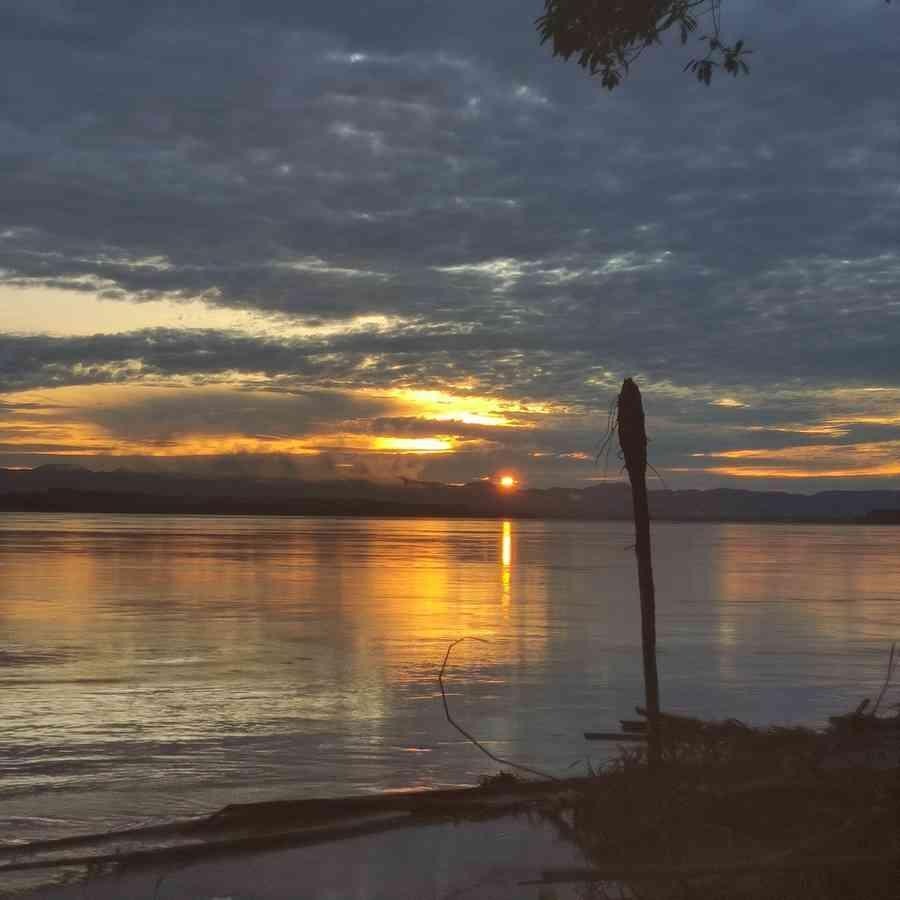
Today I need to dry my stuff somehow, because I slept in a wet sleeping bag and hammock, which were being constantly splashed by the waves. Maybe today or tomorrow I will have a rest day. I can already imagine how I will get everything ashore, check the condition of the boat and equipment from A to Z, take care of the tent and kick out all the ants, because I am sick and tired of them! There are already a few colonies in various corners. I flush them into the water, and they swim back out. They have adapted well.
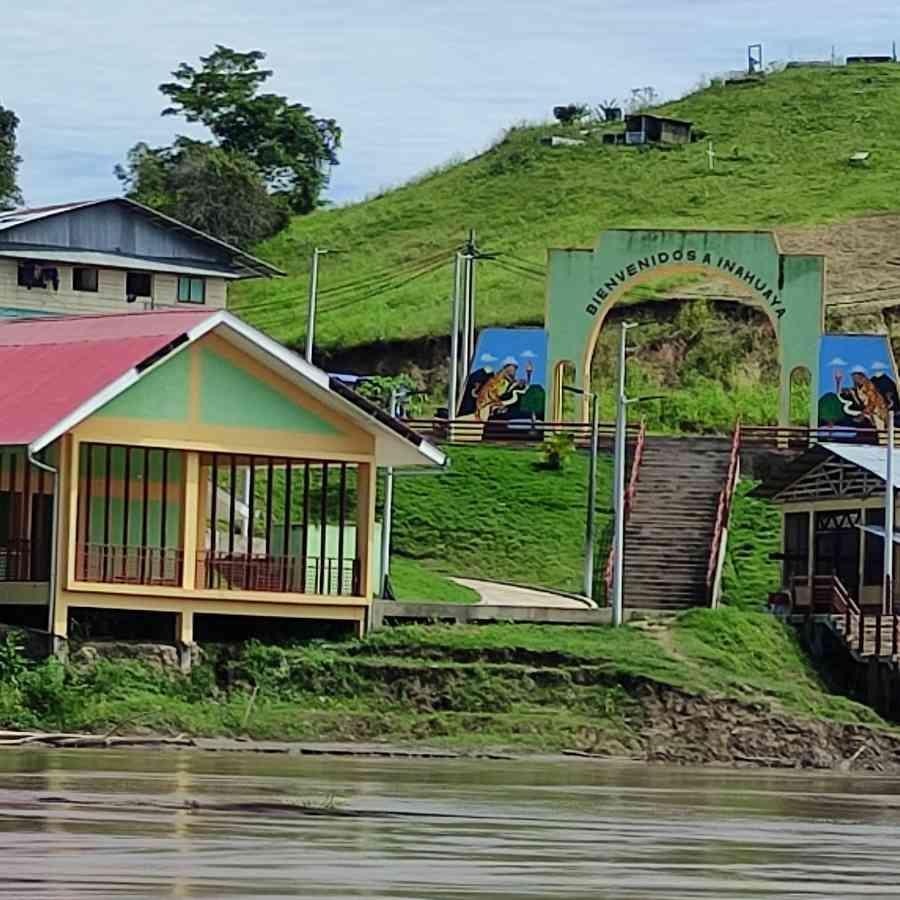
I passed a village with a funny name, Inahuaya. Heh. It sounds very similar to an obscene phrase in my native language, “why the f***”. “Why the f*** are you here?” is a question that I will be asked many times. The whole settlement is up in the hills. The inhabitants are lucky not to be threatened by floods. It looks very peaceful from the outside, but I do not want to land today.
I find a place with long reeds – I need more material for the tent, so I cut some more stems. In the process I am almost eaten by ants that live in the reeds. I am so sweaty. It is not surprising, because my long-sleeved shirt protects me from mosquitoes, and I have high boots on to protect me from snakes. And I slash and slash at the stems with my machete – while it is terribly hot outside.
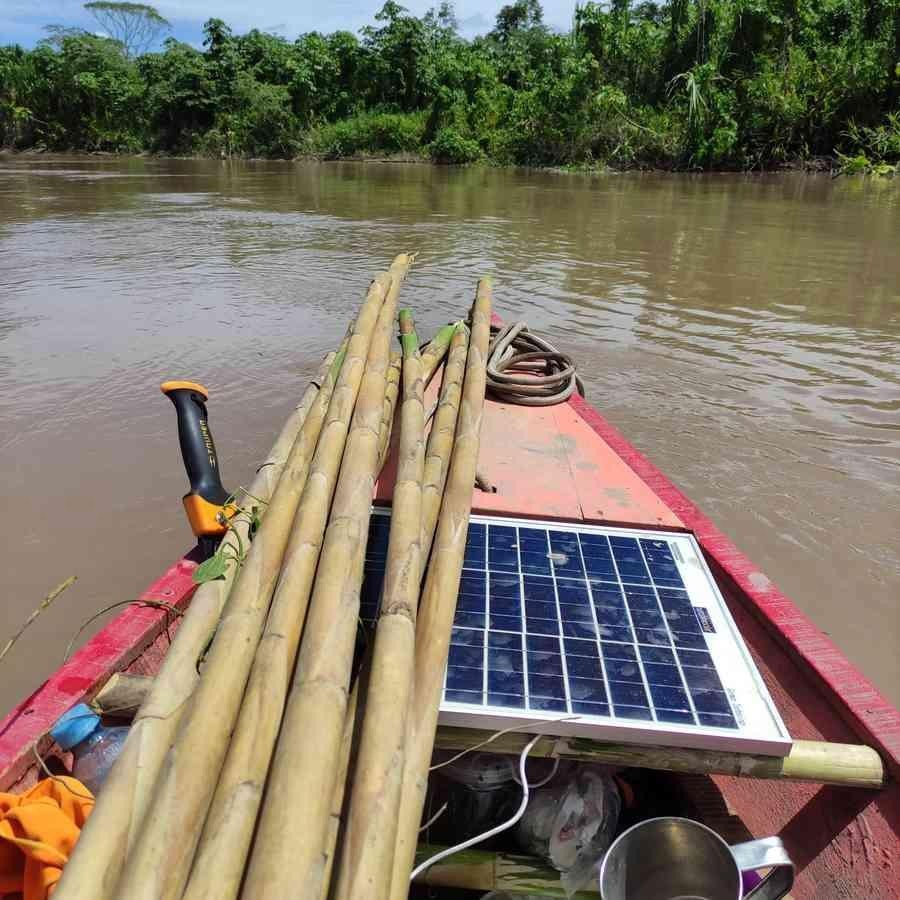
Now there were even more ants on my boat – I brought them with the reeds. No matter how hard I tried to find them on the cut stems before I carry them with me, their inhabitants were skillfully camouflaging their dwellings. The remaining achievement for today is to find a suitable place to land, but the banks are very high, and I cannot drag the boat up there. All the plains are occupied by small settlements, and few cattle graze there.
While I was scouring the bank for a suitable spot, a boat with a whole family approached me: a man, a woman, and a child, about 5-7 years old. We talked for a while. Jonas, the head of the family, invited me to have lunch with them. They live nearby. I joked to myself that I hope I am not invited as the main dish. You never know!
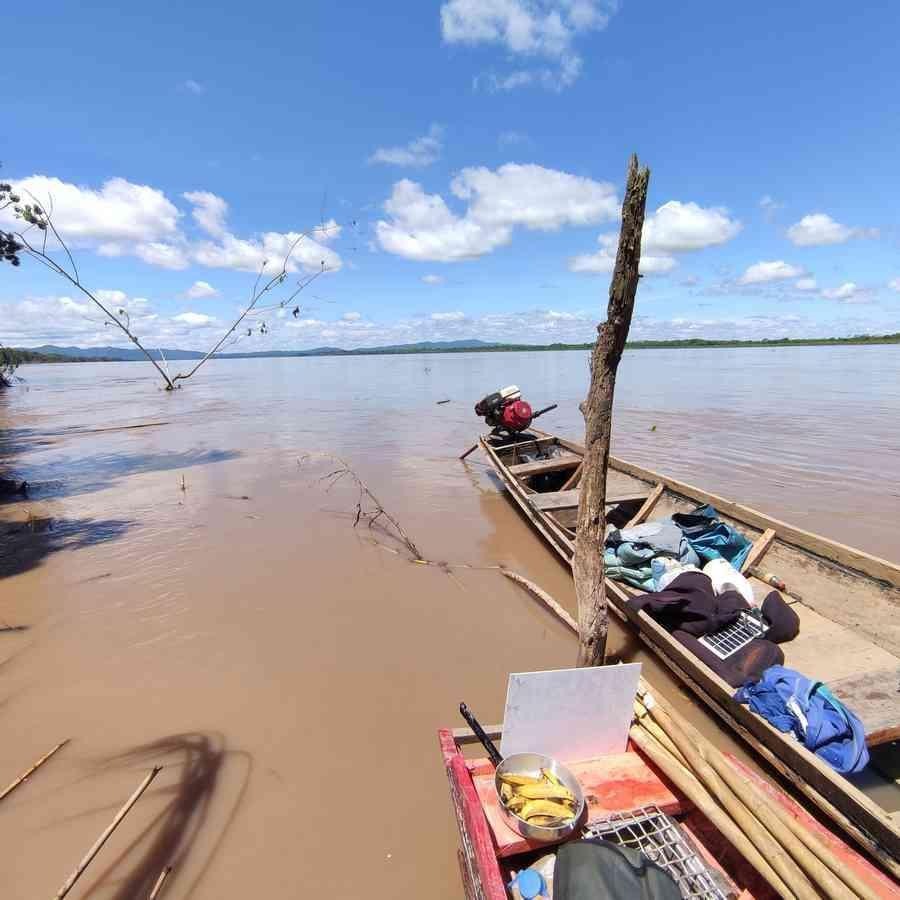
The family were fishermen to the core. They lived in Inahuaya and spent their days and nights here while working. Nearby was a lake where they keep a canoe and set their nets. Jonas’s wife cooked some incredibly tasty fish, and we had a meal together. It seems to me that I am finally not hungry anymore.
With great curiosity, I asked them a ton of questions about the way the locals fish and live. Then they offered me to stay longer to get the answers I was looking for. I could not refuse such an offer. It was a real gift and an invaluable experience!
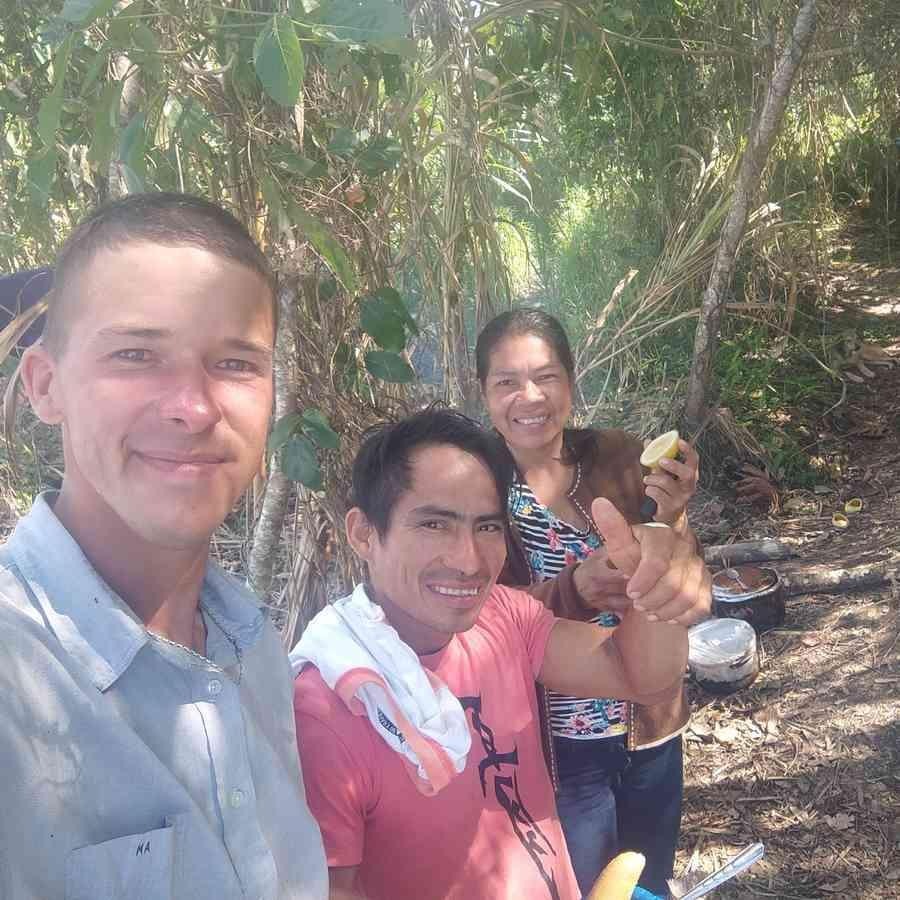
Here I got the cherished answer to a question that had been hanging in the air for a long time: what were the nets along the river banks? More than once I had seen fish beating in them. It turned out that they were not nets at all, but “Anzuelo” (hooks). It is a major method of catching big fish in the Amazon. The scheme is very simple: not far from the bank, two reeds are poked into the water, and between them a nylon thread is stretched for 7 metres in length. Every 3 metres a huge hook hangs down, barely above the water. Live bait is speared on the hooks and attracts predators with its convulsions. A large fish comes to the bank at the noise and makes a throw, after which it cannot get off the hook as it barely touches the water. That is, in a way, ingenious.
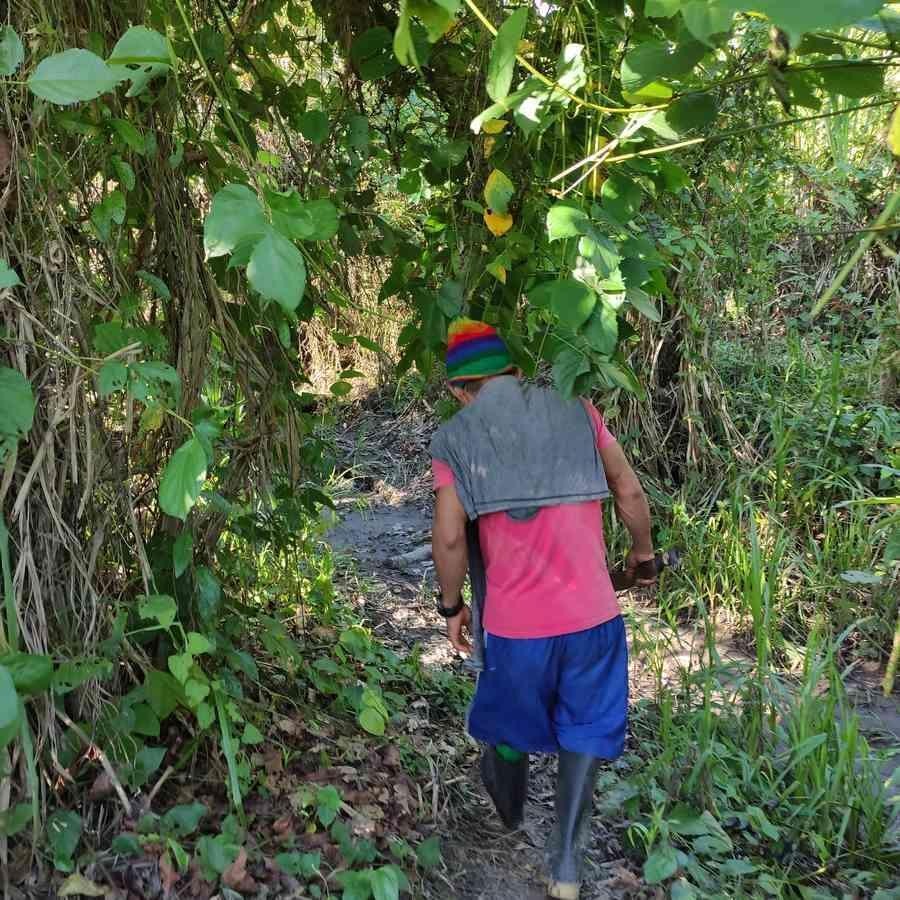
After lunch Jonas suggested that I should go fishing with him to show me what I could catch here. We walked down a narrow path in the middle of the jungle that led to an overflowing lake and flooded forest. There it was in front of us – the kingdom of snakes and caimans! Cool! I sound a little crazy now, am I not?
I have been fascinated by dinosaurs and everything related to them since I was a kid. I even went so far as to ask my mother to buy me a crocodile. When asked where it would live, I confidently replied that it would feel more than comfortable in our bathtub. The comfort of the family, of course, was not on my mind at the time. So do not wonder why I am so attracted to all kinds of reptiles. Somehow, I even got harmless forest snakes live in our flat as my pets. Mum will not forget the day she found them in the linen closet. They had got away.
For the sake of curiosity, I decided to try setting my fry trap in this flooded forest, throwing in some farinha. Jonas watched the process with curiosity, as he had never seen such a method of fishing. We waited a couple of minutes and checked. There’s fish inside! A few tiny fish that look like piranhas. Are they little pacus? It is a herbivorous piranha. I was thrilled, and so was Jonas, but now it was his turn to teach me.
We go deep into this mangrove forest with crystal clear water and find two canoes; one of them belongs to him and the other belongs to his friend who will not be back for fishing until the evening. I was trusted with one of the canoes, and I was incredibly excited about it. It is a real, well-chiseled canoe! It is no more than two metres long. I get in and realise how unstable, but easy to maneuver it is. It comes with a paddle. Jonas shows me how to hold on to the paddle head with one hand and paddle with the other.
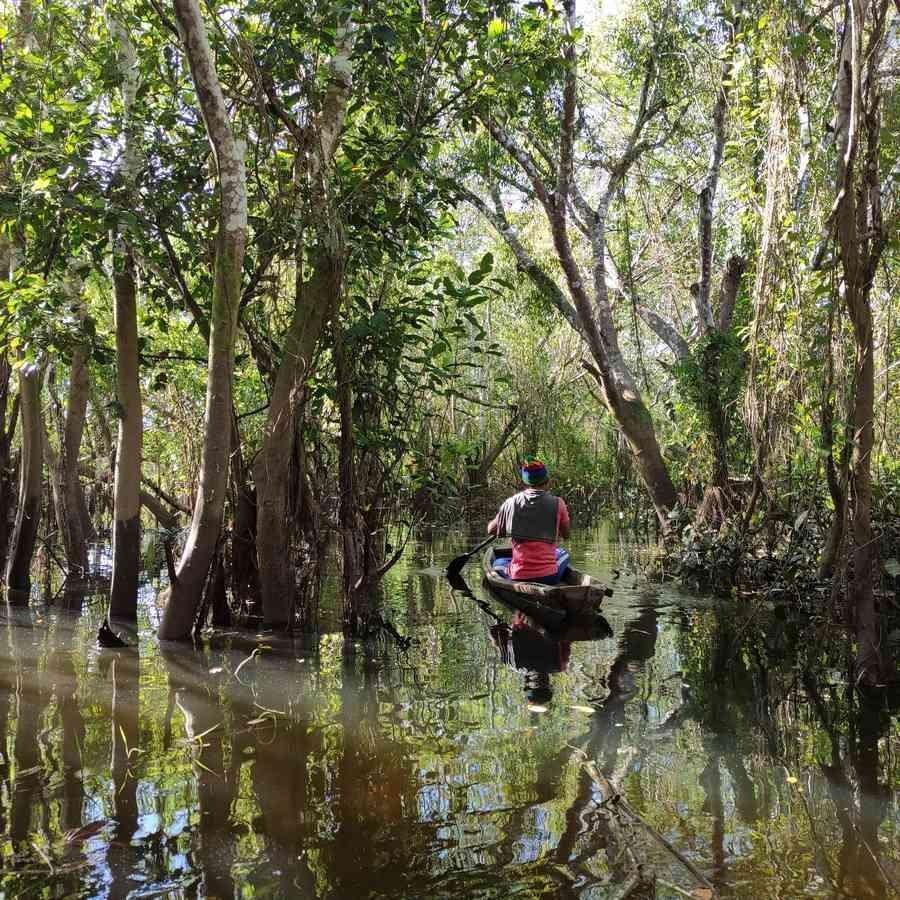
My first attempts to steer the canoe looked terribly ridiculous. I crashed into the trees several times, and then I realised that the water was several metres deep underneath me. If the canoe flipped over, I would be very sad. At the very least, I would lose my fishing gear. Jonas and I moved silently along a tentative path among the mangrove forest, wiggling gently along the corridor (and I still occasionally bumped into trees).
I loved it. The canoe was incredibly easy to maneuver. It could be turned 90 degrees in one motion! We reached some shrubbery; my teacher lifted the leaves and revealed a black berry that reminded me of our bird-cherry. This, he explained to me, is what the locals use to catch fish. We moved another hundred metres through the forest, and he left me alone, warning me that he would be back in a couple of hours, when he finished setting up his fishing nets for the night. He also insisted that I should not leave this clearing in the middle of the forest, otherwise I might get lost. I was not planning on it. Two hours of fishing was not a long time for me.
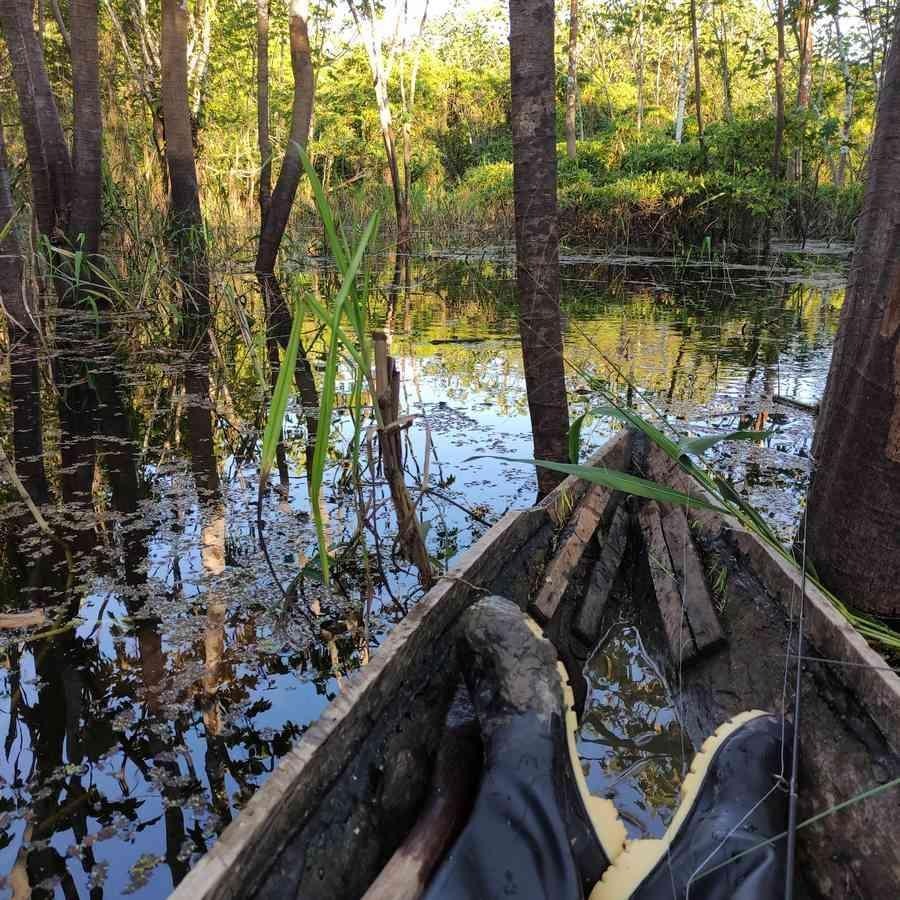
So, I am on my one now, and I am thrilled. I spear a berry on the small hook, it barely holds on and leaves red marks on my fingers (just like bird cherry). I cast the fishing rod into the water, and… the small float goes under water almost right away! I pull out a small fish, 7-8 centimetres long. It works! I cast the fishing rod again – and there is another fish on the hook soon. After an hour and a half, I had a dozen small fish in my bucket, and the berries had run out. Then I decided to go back and replenish the stock myself. It was a risky venture, given the abundance of turns, but I followed the marks on the trees and managed not only to find the berries, but also return safely. The sun had almost set, the fishing halted, and I suddenly remembered a song by the Russian punk-rock band ‘King and Jester’. The song is about a man who finds shelter with a forester deep in the woods, and after a hearty meal and a good conversation when the forester tells him that no forest animal is his enemy, they hear wolves howling in the distance, so the forester says “My friends want to eat now, let’s go to the woods, mate!” If Jonas does not return in time, I will have every chance to get acquainted with the inhabitants of the area. It is terribly interesting!
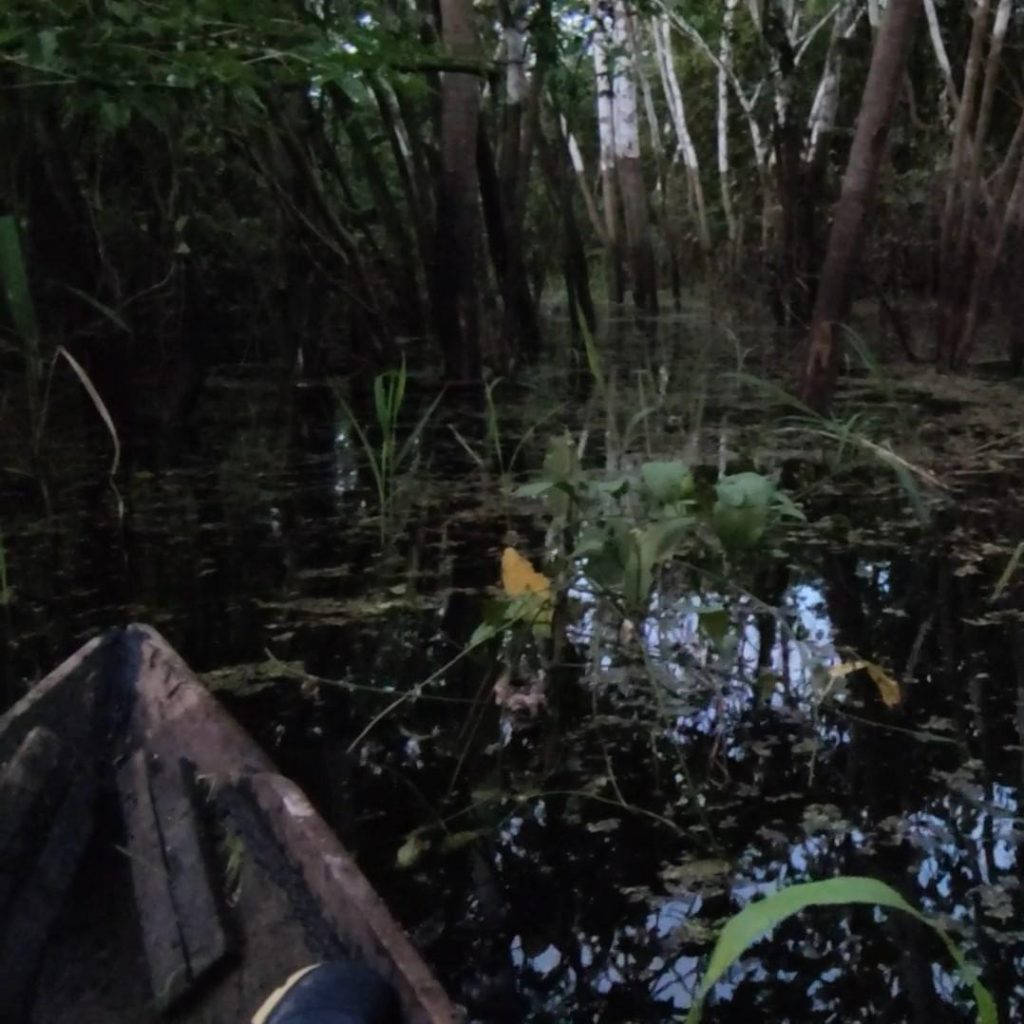
My expectations were wrong. Jonas returned, and we headed back to the camp. All the way back, he was shining his flashlight into the trees around us. I realised that he was looking for a crocodile for me, for I had been telling him how I wanted to find one. According to him, there are quite a lot of crocodiles here, and they go out to hunt after sunset. They do not attack people – there has not been a single incident, at least not in his memory and that of his father, who is also a fisherman to his bone. That is reassuring.
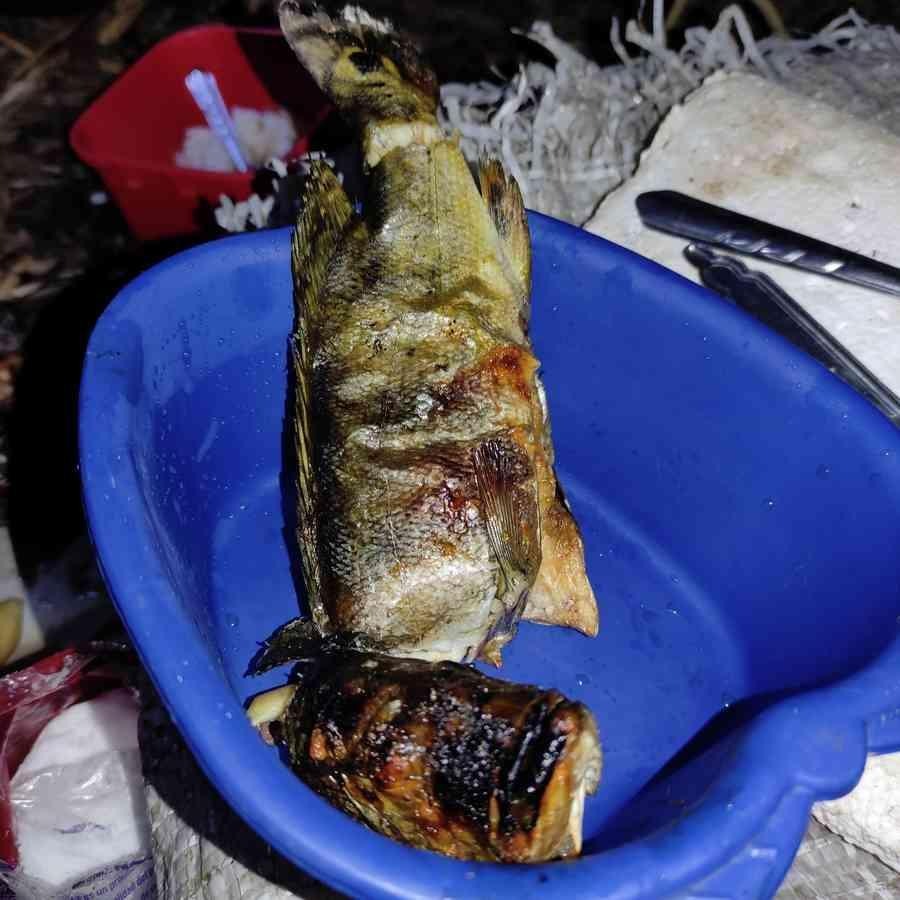
Unfortunately, we did not come across any crocodiles on the way. At the camp, I met the father. He turned out to be very similar to Jonas – a kind and open man of short stature. We sat by the fire and had a hearty dinner of fried fish. I tried piranha and catfish. As good as the food was, the experience of socialising with the locals was much more valuable and enjoyable. I felt genuinely welcome here, and I genuinely welcomed them. It is just like hitchhiking again, a very familiar experience to me.
It is a curious contrast. Just a day ago I went to bed in a wet sleeping bag, under the rain, being eaten by mosquitoes alive. It was so hard to keep up my good spirits, and suddenly here I am, lying in a hammock under a starry sky, satiated with both the food and the experience. That is why I love this kind of travelling – how unpredictable my days are. It is incredible.
I may have some real challenges ahead of me, but they are worth it, if there are days like this on the way.
22 April, ~37 (319) km covered.


