Contact
Write to me
If you have a question, an idea, an invitation to speak, or just a few words after reading.
The world is better than they say. I’ll show you.
The world is better than they say. I’ll show you.
This is the day when I set off. It is the most important day, too. The hostel is full of new equipment: from sealed jars for cereals to a solar panel to a pot for my future catch when I start fishing. All this stuff can hardly fit in my rucksack, but I decide to carry it to the harbour on my own. This will give me an opportunity to say my goodbyes on the way – to those who tried to help me with my preparations over the past few days. These include Juan, the hostel owner who spent several evenings with me, talking about the river; Luis, the solar panel salesman who bought one of the power packs from me so that I could afford a panel (he also joked a lot about me being eaten by Indians); and Joselie, who came straight to the port to give me a good luck llama amulet for the journey. These are just a few of the people I was lucky to make a closer acquaintance with. There were also quite a lot of market vendors whom I visited again and again in search of this or that important thing. My search for a compass was quite a story! I did not find everything I had planned to; for example, I did not find any small bells for fishing. Finding some specific thing in Peru and Bolivia is an adventure of its own.
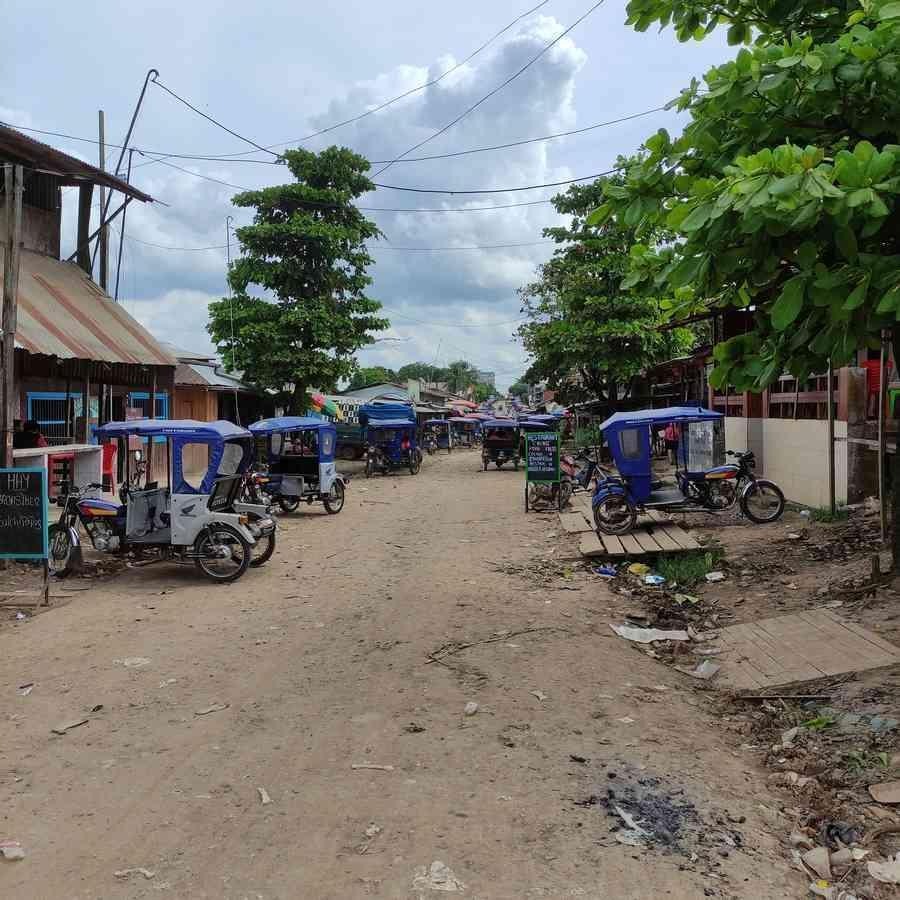
Finally, I’m in the harbour. My canoe, christened ‘Libertad’, is in front of me, and the craftsmen who had promised to help me launch it on the water have not arrived yet. Only a few local drunks are loitering nearby. The story of my relationship with them deserves a couple of paragraphs, too.
On the first day I met some guys who, as far as I understood, usually help craftsmen with the construction of boats. These guys lend a helping hand at times, holding a plank or painting the hull. One of them really liked my black hat. It had accompanied me on my trip along the entire continent and was truly dear to me, but I had already decided that I would rather buy a light one, so without any hesitation I decided to give it to this man. He was beyond himself with joy! It seemed to me then that it would be a good display of trust for one of those who would probably take part in the construction of my boat as well. What if it made a difference in the quality? For the better, of course.
Now some of the port drunks were sleeping under a canopy, while others were wandering nearby. I already understood what they were waiting for – I need to launch the boat, and they need money to buy alcohol. They could not accept the fact that I had no money to spend on anything other than food. ‘White’, ‘gringo’, ‘wallet’. I hate it. I am not ready to give my last money to someone who will get drunk with it.
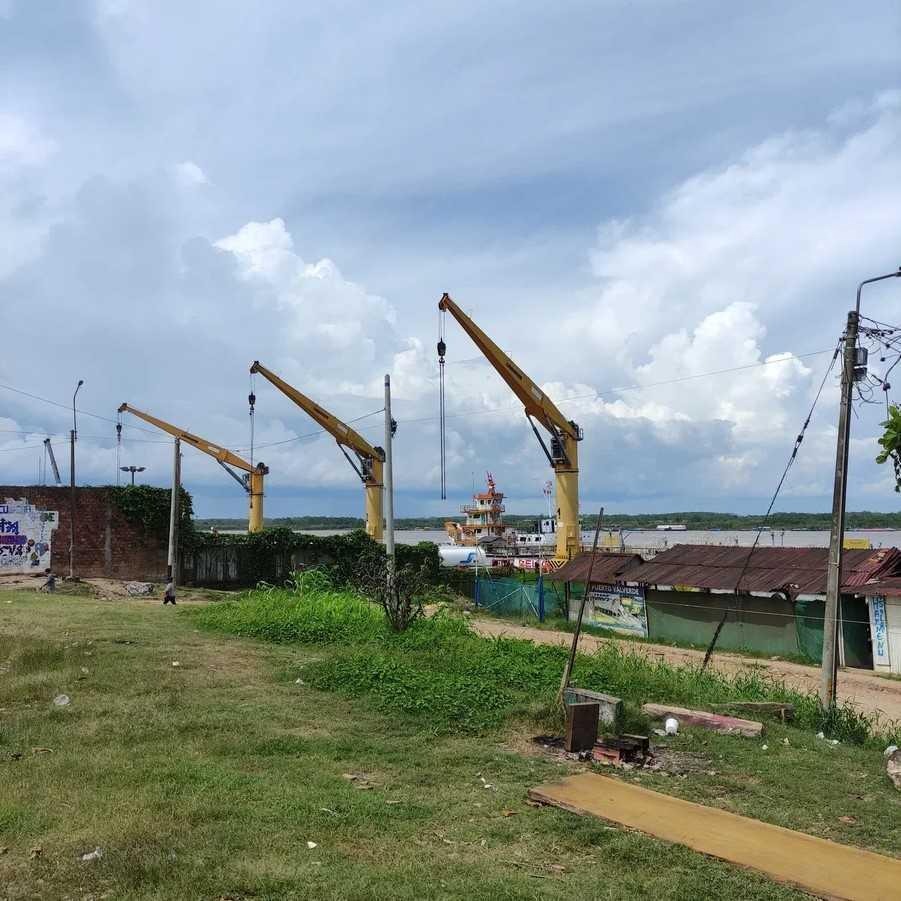
It was then that Segundo helped me out. Segundo was one of the craftsmen at the workshop across the street, where he and his sons assembled various metal structures. We sometimes talked with him and so he assured me that as soon as they were free, they would help me with the launching without any problem. Moreover, he gave me a small metal stove for my boat and a bag of canned food. It is difficult to overestimate such help, but I trusted him even more because of what had happened the day before when I noticed my former black hat on him. It turned out that the drunkard to whom I had given it as a present a few days earlier simply wanted to exchange it for alcohol! Segundo intervened, buying it back so that such a valuable item would not be lost. My indignation at that discovery knew no bounds, and I later confronted that drunkard and asked him about my hat, to which he replied that he had not sold anything, and the hat was at his house. I took him to Segundo, and we forced an honest confession out of him. It was a striking contrast – two people with their moral codes so different.
Segundo and his sons have finished their work. The five of us are now pulling the canoe to the harbour, bypassing the market where the fruit has just been unloaded. People around us are excitedly interested in what is going on. The boat looks a little out of place – it is a canoe with a high gable roof. The masters insisted it would not interfere with the balance, and for some reason I decided to trust them. We lowered the canoe into the water, and I decided to test its performance. This was unexpectedly horrible, as the boat was completely unstable. Any movement caused it to lean sideways so much that it almost scooped up some water. The whole port was watching. I think they were even more frightened than I was. Where was I going to travel in this tiny vessel? Why? The mad gringo … “You will die.” I asked for an axe and chopped down the roof without hesitation. The canoe was much more stable now. I set about loading the gear aboard. Indeed, sudden movements still made the canoe rock, but there was no turning back now.
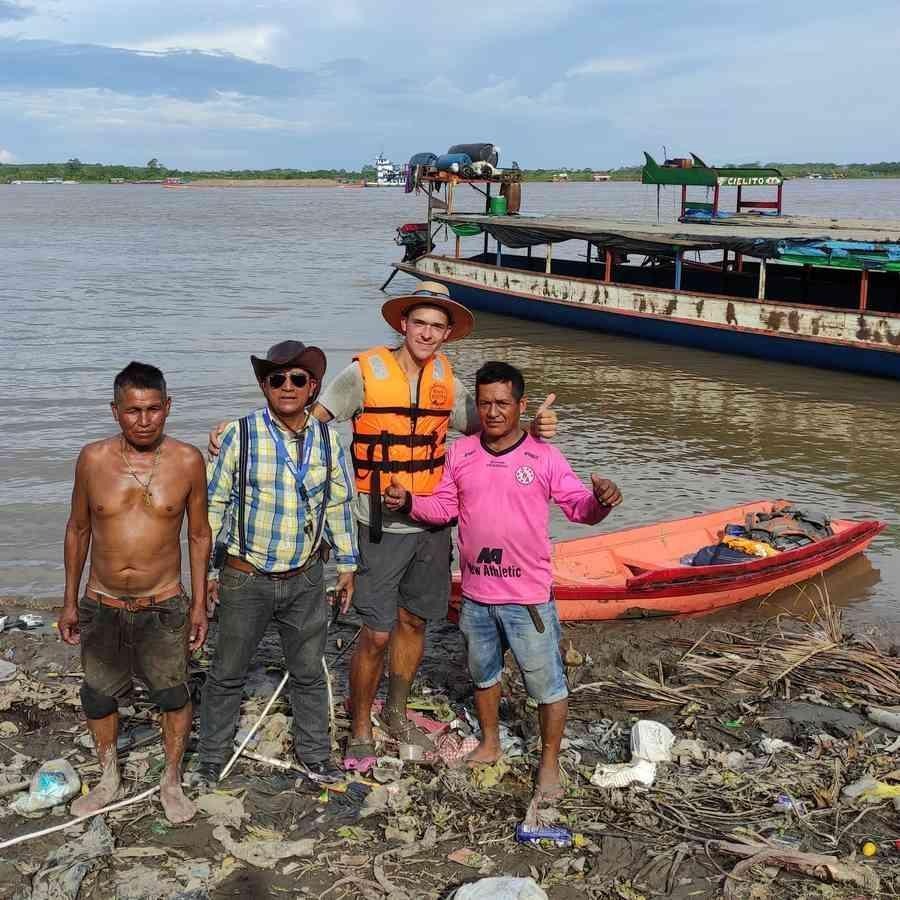
When it was time to load the water supply, canned food and stove on board, my gifted bag was nowhere to be found, although I clearly remembered that I had put it on the bank next to Segundo and the other spectators. Dozens of people watched me as I searched for the bag. Stolen! Stolen was the water that I bought with the last of my money. Okay, I can filter water on the river. What is worse, they also took the stove that was a present! That was the most offensive thing that had ever happened to me. I stood bewildered on the bank, and I could not comprehend how it was possible. The people heard my frustrated exclamations. One of them started asking around: “Who dared to steal? Can’t you see that this guy has a tough road ahead of him?”.
Five minutes later, I was given back my bag with all its contents. The thief was a woman, the wife of that drunkard whom I had presented my black hat – that same drunkard who wanted to trade the hat for alcohol, the one who had lied in my face! I was so disgusted that I wanted to leave civilization as soon as possible. How can one do that? How can one steal water from a man who treated them with the utmost respect? It was not money, not something one can sell. It was clean drinking water. This was revenge for me exposing his lie, I guess.
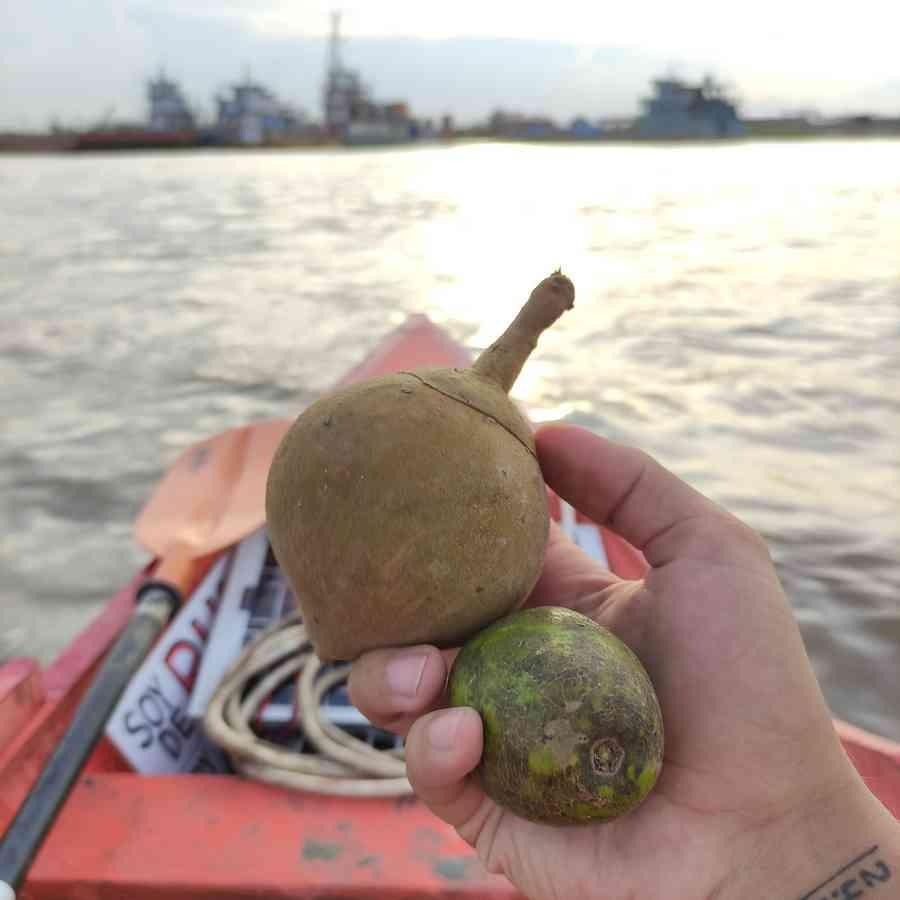
While I was completing my last resilience tests, some local brought me a bag of unfamiliar fruits. It was a relief. Some people destroy your trust, while others help build a new foundation on the ashes. You just must keep at it.
Surely, the stability of the boat was not something I was particularly happy about. Now I understood why my master builders had chosen to disappear out of sight on the important day. Segundo and another man who was building boats nearby were watching. Convinced of my determination, they suggested that I should improve the boat a little by adding two logs to its sides. I steered the canoe to the bank, and one of the labourers found a “topa” somewhere. That is the local name for a type of wood that can float on the water for decades without decaying – it is also used for pontoon bridges. The topa was cut into two pieces with a circular saw and nailed to the sides of my canoe. Now it looked like a trimaran.
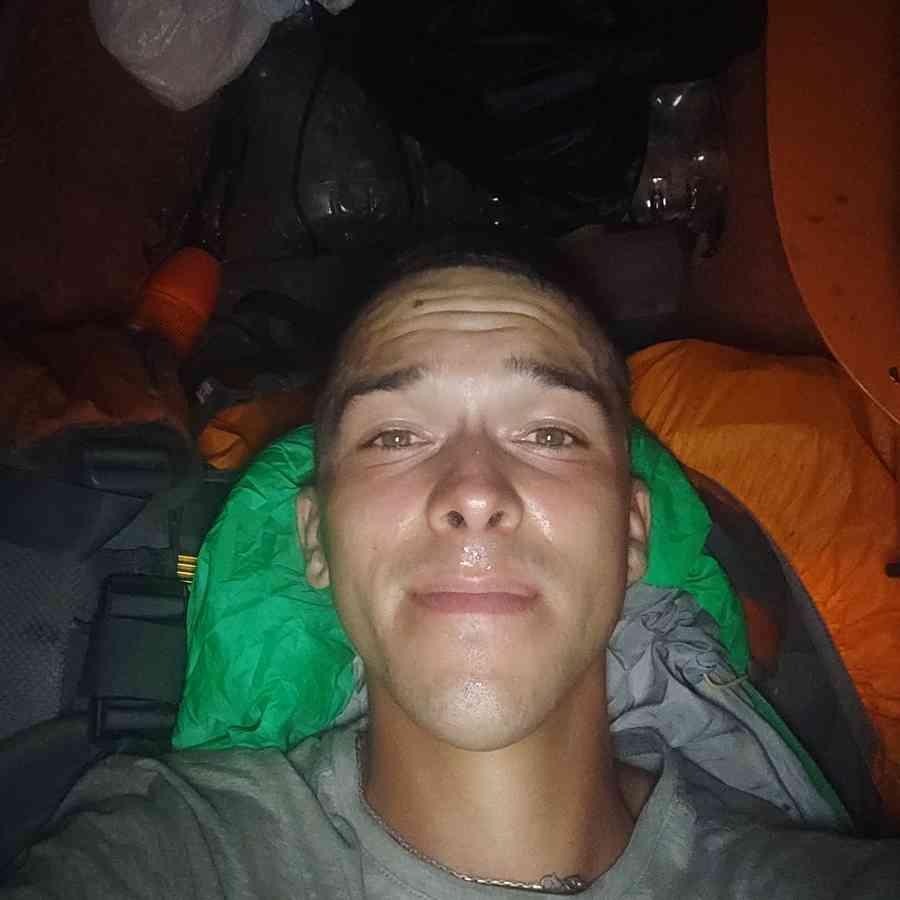
I got into the boat, paddled a few times – perfect! No more rocking on the water. I am definitely ready now. I hug Segundo and the foreman with the full knowledge that they may have saved my life with this upgrade. They wished me luck. I found myself accepting that wish.
I am off. What chills! I am paddling as hard as I can to avoid hitting the barges near the bank. They swallow whole logs with ease, and my canoe is only 3.5 metres long – they will not even notice this chip of a boat.
Fifteen minutes pass. Twenty minutes pass. I am in the middle of the Ucayali River. Muddy sandy water splashes all around, its surface is covered with light ripples of waves. I still cannot believe it. I am about to start rafting down the Amazon, the queen of all rivers!
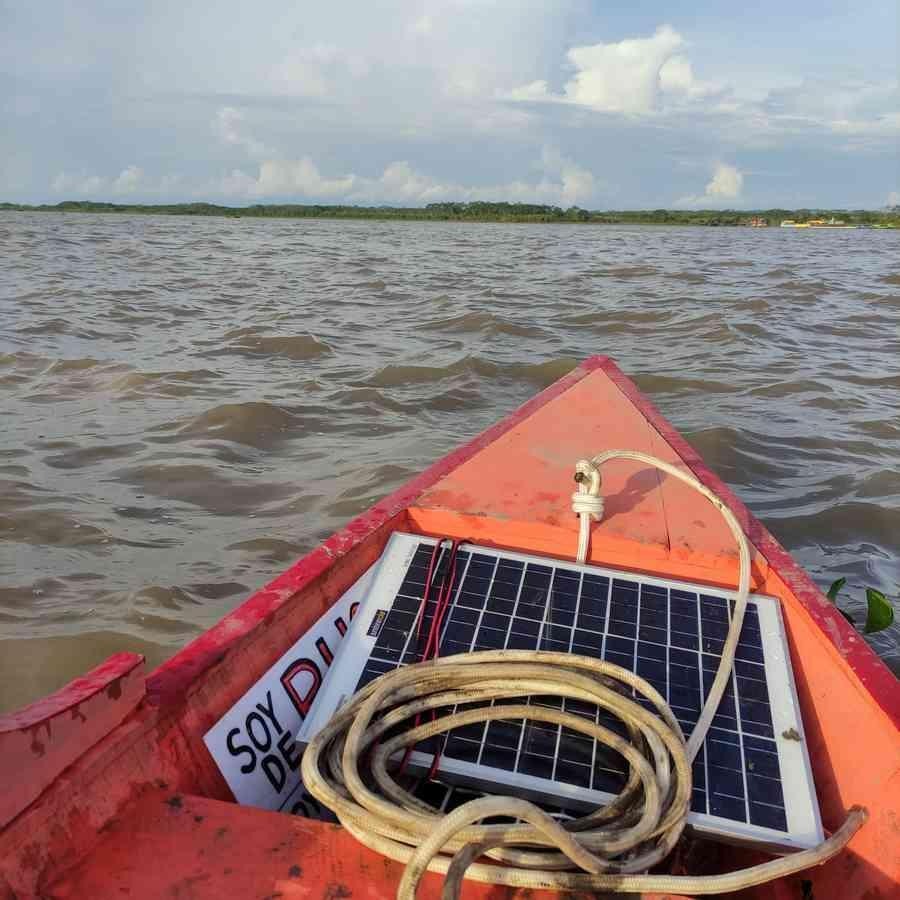
I feel an inexplicable sense of inner freedom. It is so strange. On the one hand, I am giving up a part of control over my life and my destiny – on the other hand, I can feel every moment and every breath even more deeply.
Not even an hour later, a lightning flashed on the horizon, and the sun began to sink fast. I spent most of this day in the harbour waiting for the launch. But that is all right, I have done enough for the first day as it was – I set off for my journey and my boat did not sink. That’s a good start! It is a reason good enough to celebrate and eat some of those fruits.
I try the bank now and then, looking for a place to sleep. No luck. The water is high, and the banks are sodden. It is almost dark when I reach the mouth of a small rivulet – I go upstream against the current. With two logs on the sides, it is much more difficult, but I am happy that I can do it even with this extra limitation.
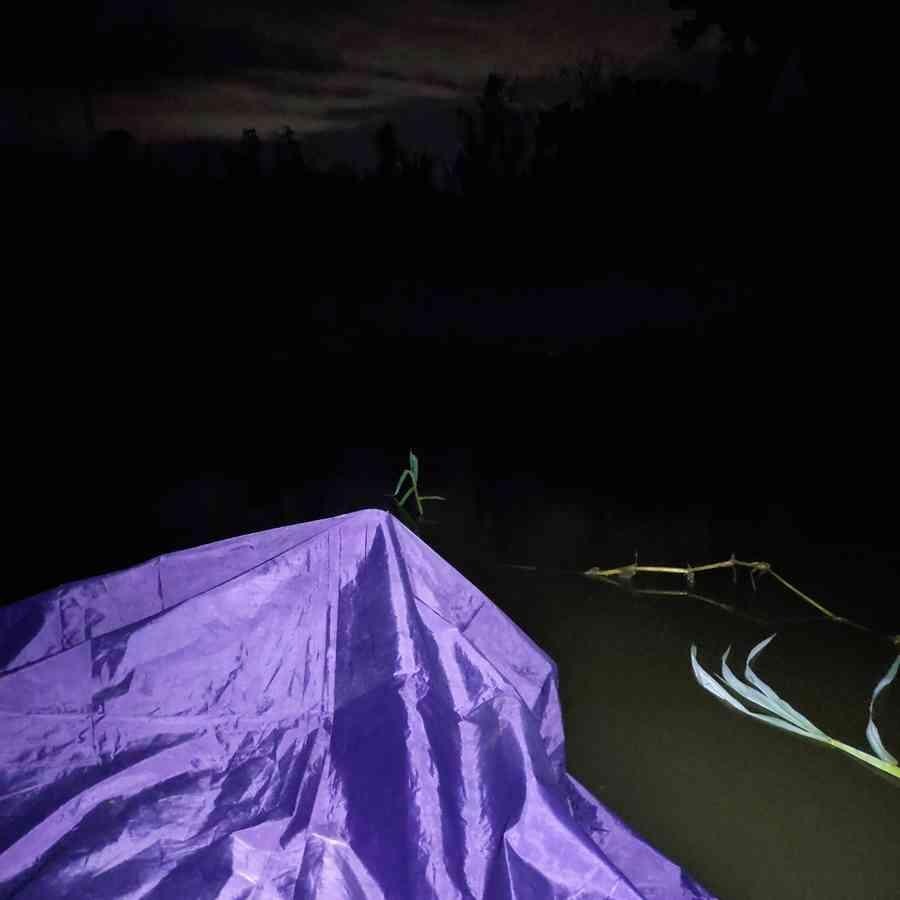
The banks are swampy, with sand all around that drags knee-deep. At my speed, I crash into the bank to get closer to a tree, because I need to tie up the boat for the night. It is still too far. I throw some reeds under my feet, but my feet still sink into the mud. I am covered in mud. I reach for the trunk and pull the boat up. I tie it down. I wash off. There are mosquitoes, lots of mosquitoes. I get dozens of bites.
I hang up my hammock with its mosquito net right in the boat and finally climb in. I am not the only one to make it under the net. It takes me a good quarter of an hour to exterminate all the flying buggers. I did it! Exhausted, I lie down in the boat. Even lack of a comfortable bed does not bother me anymore.
The whole place is teeming with life. Something large splashes nearby. Is that Arapaima, the legendary ancient fish that breathes oxygen? Or is it a crocodile? I have no notion. There are bats, there are giant beetles, there are croaking frogs around. The jungle breathes. The jungle lives.
15 April, 7 km covered.


