Contact
Write to me
If you have a question, an idea, an invitation to speak, or just a few words after reading.
The world is better than they say. I’ll show you.
The world is better than they say. I’ll show you.
It was not the most comfortable night in my life. I had next to no time to arrange a proper bed place for the night, so I had to sleep on my rucksack and all other equipment under my back. It is not a big deal: comfort is just a matter of time. I will try to set up camp earlier every night.
There were a lot of fish splashing around, but I decided against wasting my time on fishing so that I could return to the main river sooner.
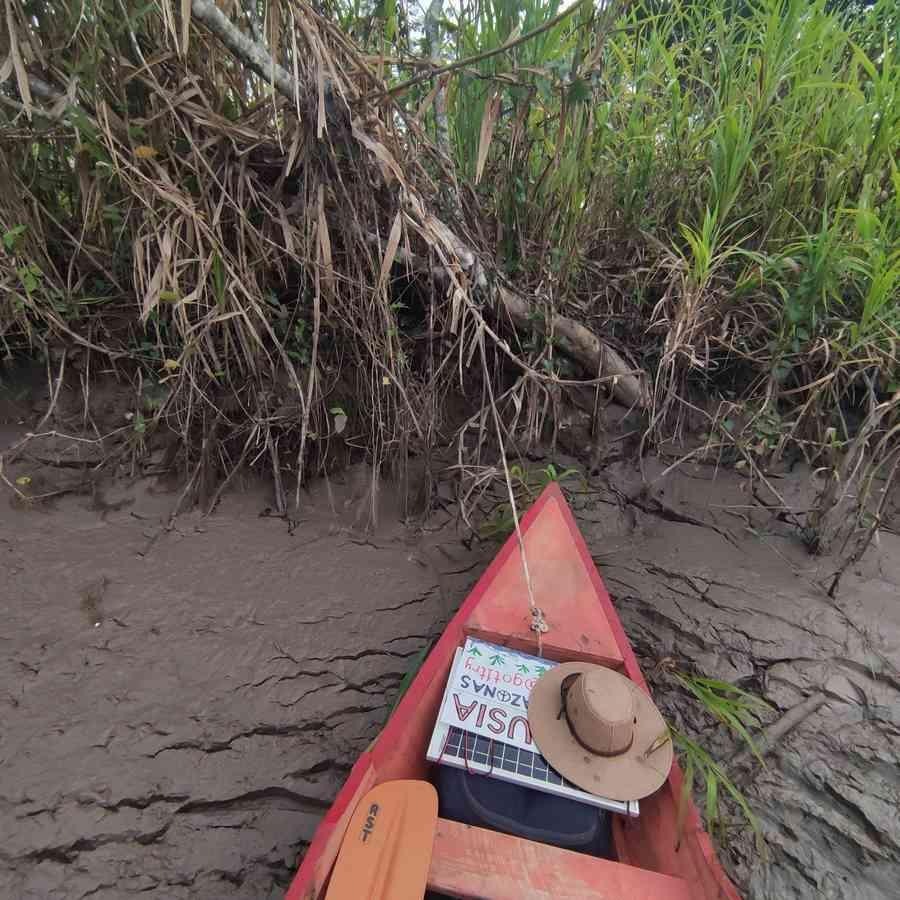
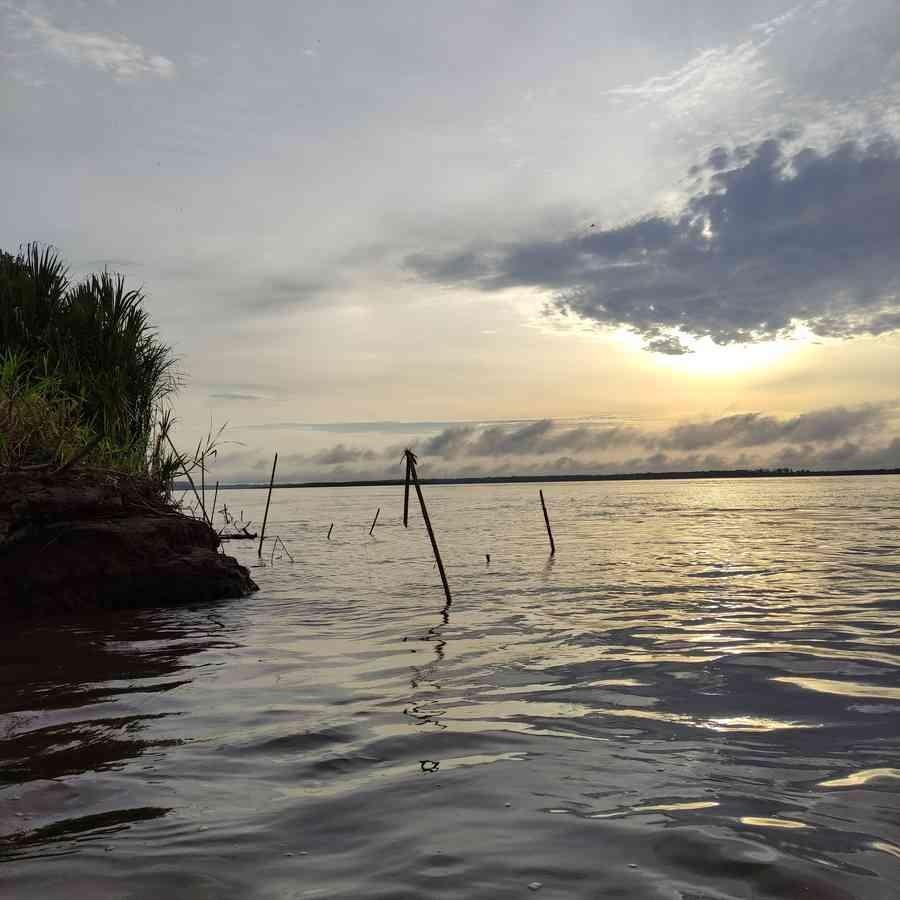
The most important thing now is to adapt to the new conditions and sort out the equipment. My canoe may not be that big, just 3.5 metres long, but with proper order it is quite a lot of space. As soon as I aligned with the current and it carried me forward on its own, I started to sort my gear out. I put the food into airtight jars and moved all the kitchen stuff to the bow. Then I inflated the cushion from the packraft set to use it as a bed and set the rucksack up as a back support. That’s better! That makes a lot of difference for my comfort.
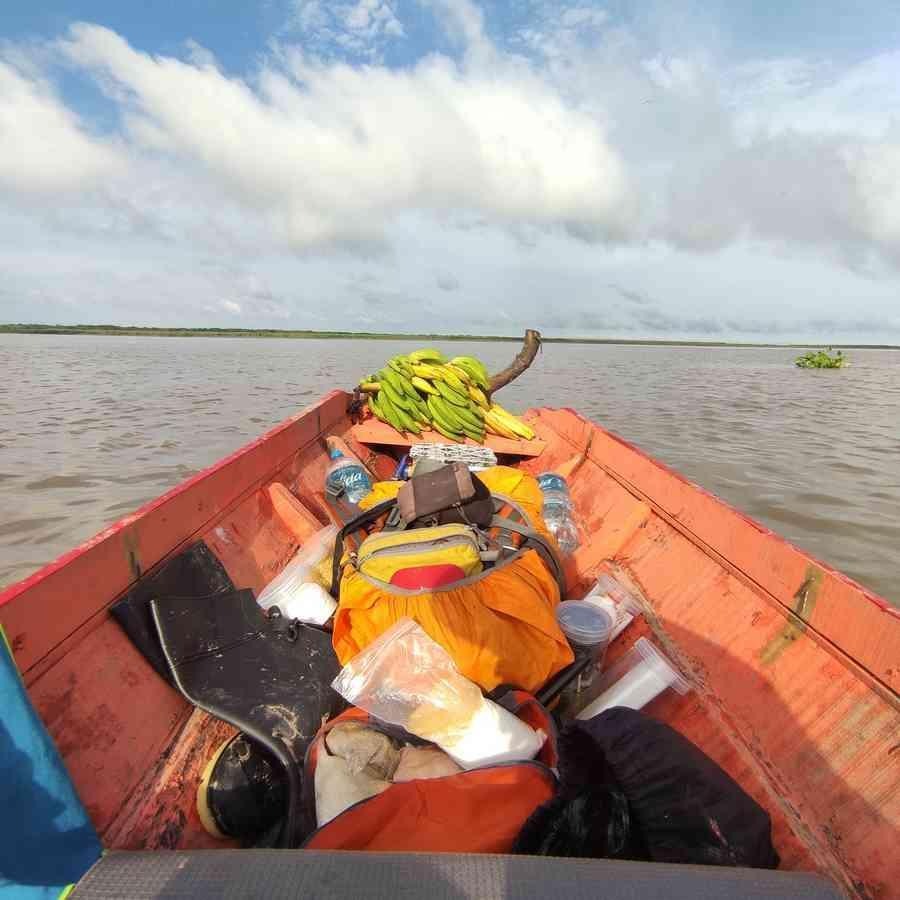
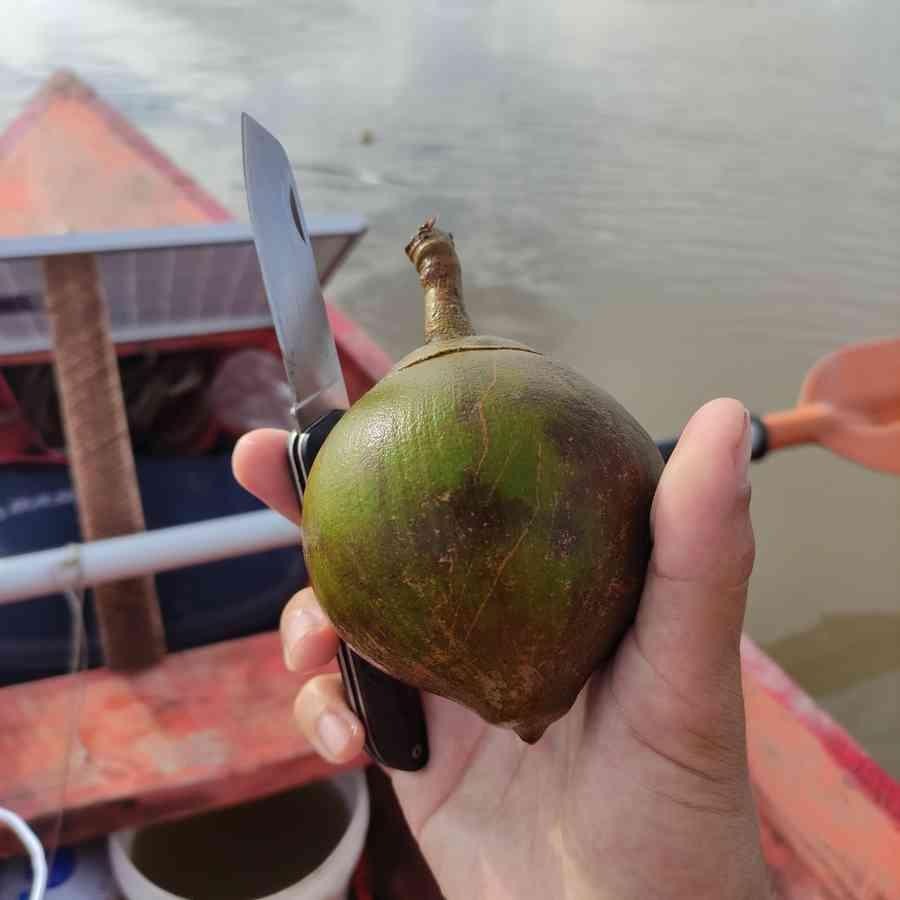
I also tried one of the various fruits I was given yesterday. I think it is called sapota, although I could be wrong. There is so much variety of fruit here that all the combined magic of the internet is almost useless. Yes, I can still get a connection sometimes, but this privilege of civilisation will not stay with me for long. Under its peel, the fruit was bright orange, and it tasted like an apricot, but had more fiber.
I had cassava flour for lunch. I bought five kilograms of it in case fishing would prove difficult. It looks like maize porridge, but you can soak it in cold or hot water easily. It is a very versatile kind of staple food, good for a lot of uses. Its greatest advantage is that it does not require a fire, and you can cook it on the go! With sugar, it tastes very good.
After midday, banana plantations along the coast ended and the jungle began. There are hundreds of kilometres of plains, no mountains or highlands. This makes the clouds seem to creep over the land, as is typical of such places. The trees along the banks of the river are small and young. May that be for the reason that the Amazon is constantly changing its course?
Having sorted out the equipment, I decided to set my fishing arsenal up. I assembled a big river float and a hook of 3-4 centimetres together. A piece of banana will serve as bait. Local people told me that fish might bite on ripe banana. I will find out soon. I still do not have any other bait. Considering that I will spend at least 10 hours on the water every day (and cover at least 50 km of the 1200-3300 kilometers that I am planning, depending on my health and a long list of other factors), sooner or later I am sure to catch something.
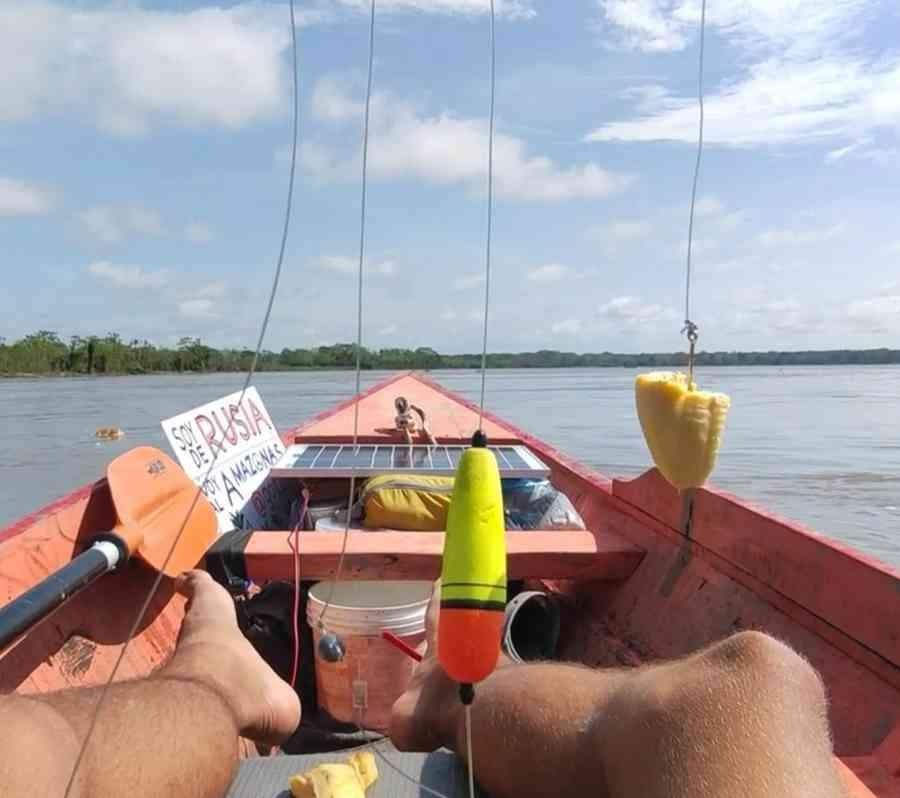
I got to see my first freshwater dolphin! Few people know that the Amazon is home to many rare endemic species like this. These are creatures that live in one place on the Earth only. You can find manatees, sharks, pink and blue dolphins here. It is a truly magical place, the cradle of mother nature.
The banana did not live up to my expectations as bait. I decided to go ashore for the first time. I put on my mosquito jacket and my boots and took my machete. I found a place where I could walk along the trunk of an overhanging tree to the dry part of the riverbank. For half an hour I wandered through the reeds. I cut down a couple of sticks so that I could dig with them. The result was meagre: three mole crickets. This large insect digs underground in damp soil. I have expected a better catch. I had heard that the soil near the Amazon is very poor, but I did not anticipate it was going to be that poor. There is sand all around, the banks are drowning and forming right before my eyes. There is not a single worm in sight.
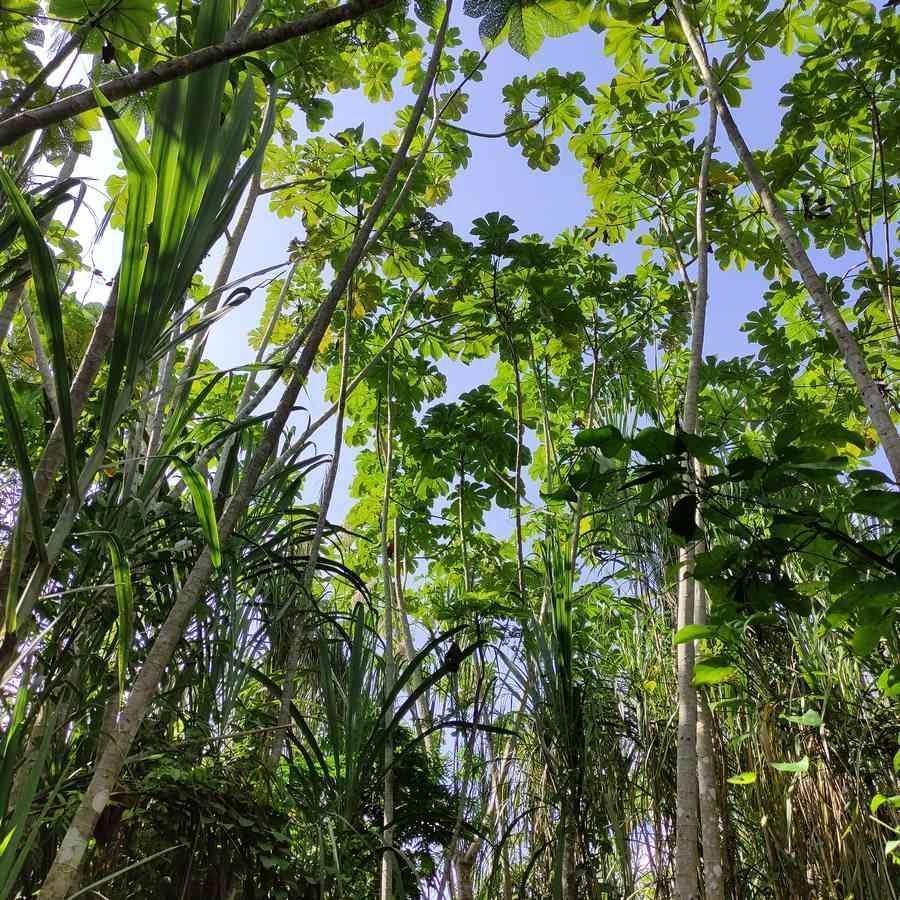
As I walked back to the boat, I realised that my improvised tree gangway was infested with little red ants. When did I find that out? As I pushed against it to bring the boat back to the waterway. Hundreds of ants dropped from the tree right into my collar; they scattered everywhere, exploring new territories. Imagine that: the sun is baking hot, ants are sinking their jaws into my head and neck, I am drenched in sweat – and then a light warm rain starts to drizzle. There is some happiness in this world!
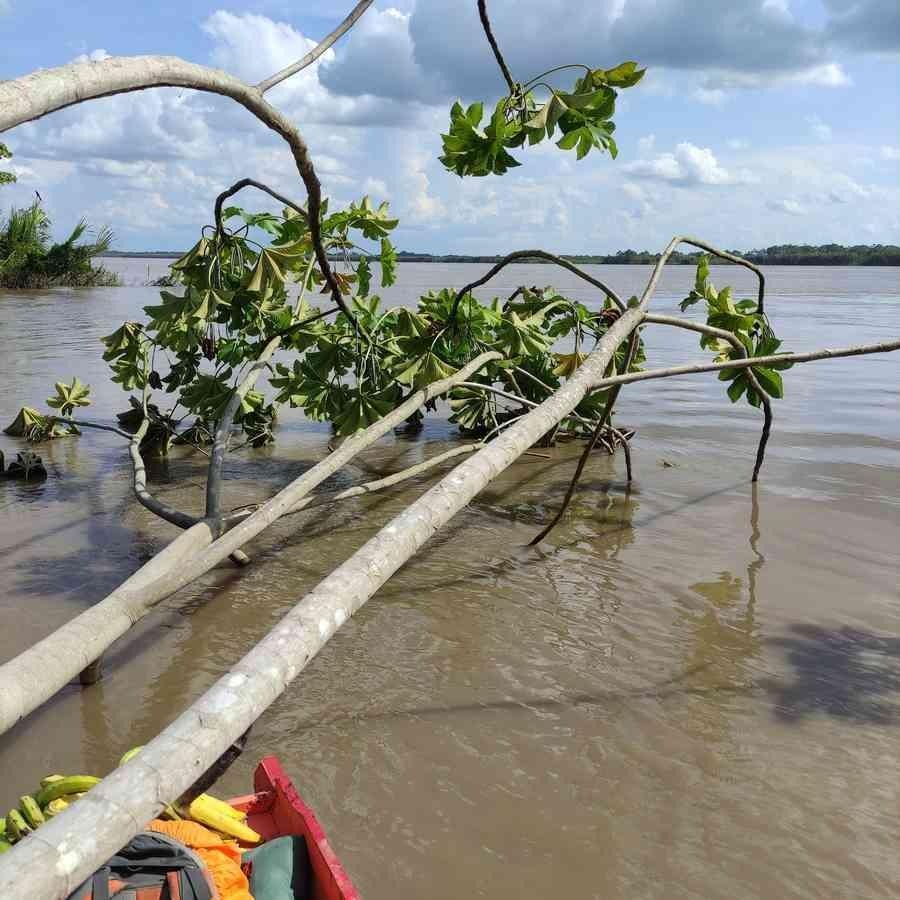
The dusk had barely started to set in when I decided to look for a place to spend the night. I did not want to walk through tons of mud like I did yesterday. However, I failed to find a dry riverbank. I steered directly to the bushes near a flooded forest, full of driftwood logs and branches.
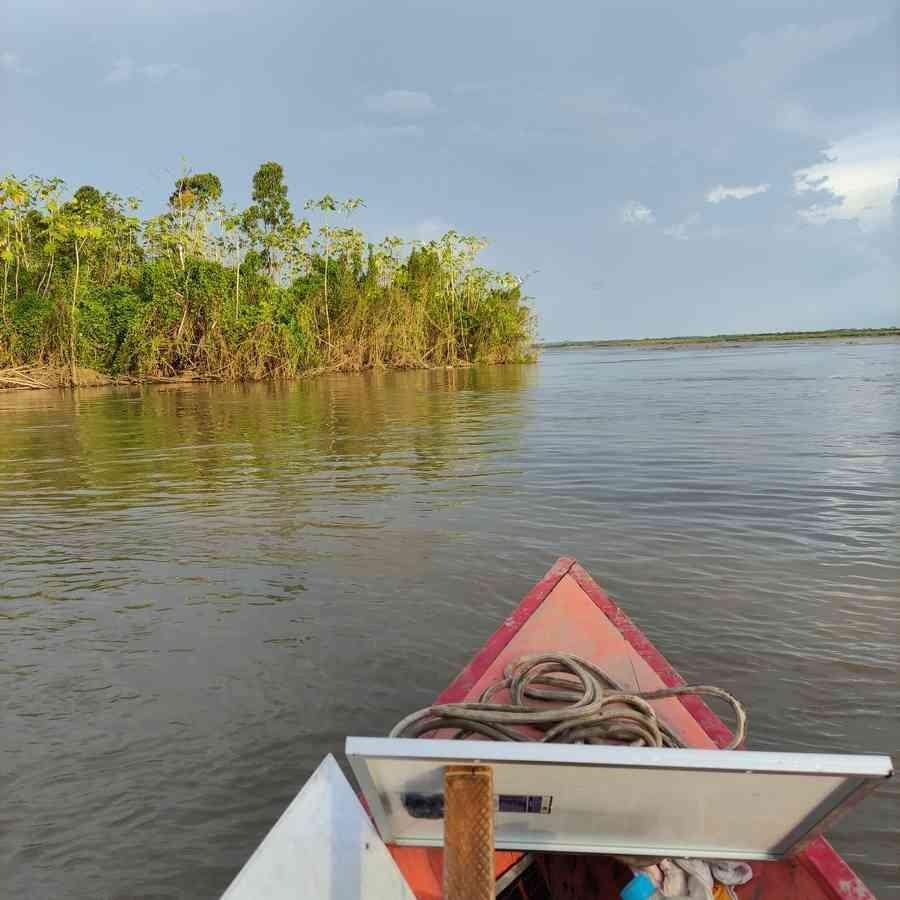
I collected some firewood which falsely appeared dry to me and tried to heat the stove that had been given to me as a gift. I used dry shrub leaves as kindling. The mosquitoes scattered at once, but the wood was too wet inside. The idea of having a fire on the boat did not work out. All right, I produced some smoke to fight off the mosquitoes. I cooked some farinha (that cassava flour) again, and it was delicious.
I set up my hammock on the boat for sleeping later and went fishing, even though the mosquitoes came in unbearable numbers as the sun went down. I was too excited to pay attention to them. I saw a head of some red fish in the roots of a tree – was it a catfish or maybe an eel? They say they are plentiful here and I have to be careful. It is a good thing I did not catch one. I can imagine the news: ‘A Siberian man drowns in the Amazon on the second day of his trip after being electrocuted’. Heh-heh. No, that would not be funny.
I went to bed feeling more anxious than the day before, as during the day I noticed that the boat had a small leak. I looked for it, but I could not find the exact place. Apparently, the water leaked through tiny holes between the planks. They were generously greased with bitumen, but when it took only three days to build your boat, you can hardly expect it to be impenetrable. More than once I had seen local fishermen wielding a scoop made from a cut plastic bottle. It sounds wild, but it is just part of everyday life for them – scoop some water out of your boat occasionally. I guess it is my reality now. That does not give me comfort, as I am about to fall asleep in a boat with a leak, and right on the water.
Thunder rumbles in the distance, and lightning flashes on the horizon. I am surrounded by a mangrove forest. I make one last attempt to catch some fish, but to no avail. Overpowered by mosquitoes, I hide in the hammock.
It starts to rain during the night. I check how much water the boat has collected. It is just a little water in the hull – which is comforting. I pull the mosquito tent over the hammock. There are hundreds of mosquitoes around. They are everywhere. It is like the rain does not concern them at all. They are after me.
16 April, ~ 45 km covered, 52 in total.


