Contact
Write to me
If you have a question, an idea, an invitation to speak, or just a few words after reading.
The world is better than they say. I’ll show you.
The world is better than they say. I’ll show you.
It is only 5:20, but I am already on the water. The thing is, this morning ants started biting aggressively. I have no idea what got into them, but they did not let me sleep. My eye hurts, too. Some insect must have given me a bite. Despite all this, I am in a good mood. The river is reflecting the rays of the sun that has not risen fully yet. It is beautiful.
Catfish were making a lot of noise in the morning. Apparently, they were hunting right next to my boat. It kept me awake too because the sound excited me. This is encouraging; it tells me that in certain places here fish behave the same way as on the Ucayali: these are similar splashes and a similar day-night pattern.
I cannot see anything on the river, I am waiting for the sun to appear and the mist to clear. Every now and then motorboats pass by, and I feel threatened. I hope they do not drive right into my boat. They should have just enough time to slow down as they notice me in the mist.
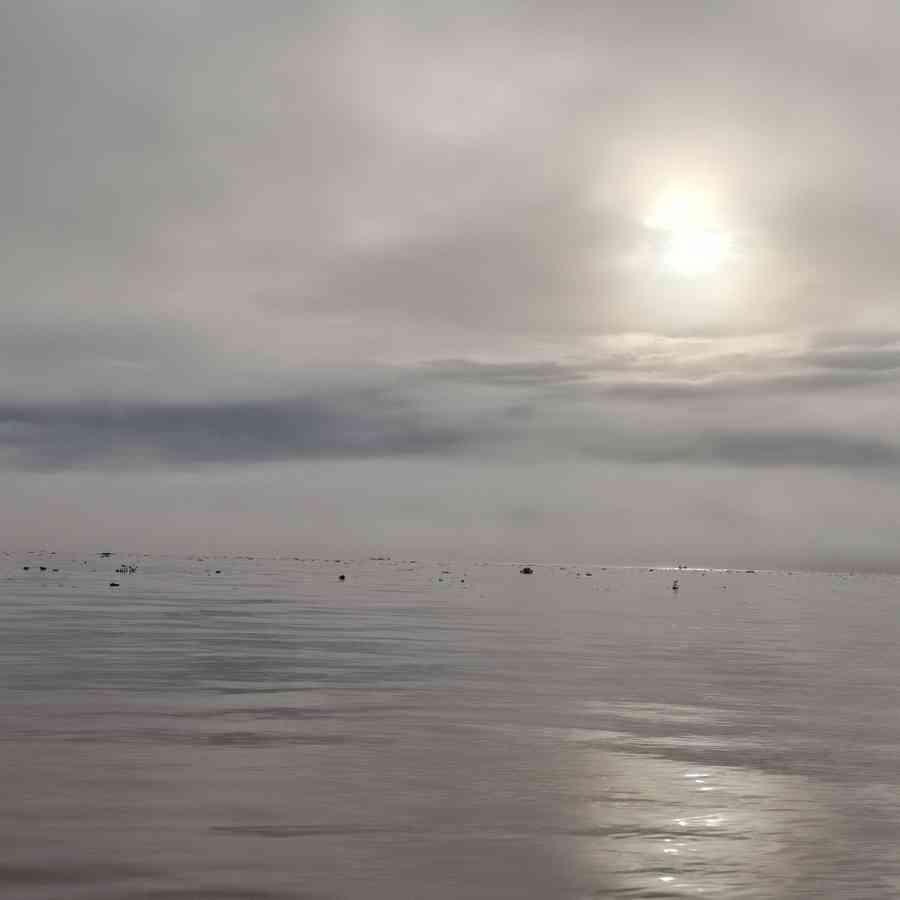
Despite the risk of an accident, the atmosphere in this mist is marvellous. There are still about four hours to go before I reach the city, so I am making bananas for breakfast. I wonder if boiling regular bananas would give a similar result. Would it, though? I will try it at home. They also fry them here to make a kind of chips. They are very tasty and, I think, very healthy as well.
I saw a spider of a new colour in the boat. It slipped under my bed and apparently decided to join my current crew. It is curious that as I lift the boards, I do not see any inhabitants. They are very good at hiding. If only they exterminated the ants, they would be such valuable company! Unfortunately, the ants are thriving. When I get to town, I will buy some dichlorvos and clean the boat up. Only one inhabitant must survive!
Spiders, on the other hand, do not bother me at all. They keep to themselves, they do not bite, they do not interact with me. They are little scary, especially when I reach under the pillow and sometimes discover a spider the size of my hand. Anyway, scary appearance is not a big problem, and ants are much more unpleasant.
I saw a bridge in the distance. Iquitos is close. The bridge, of course, is not over the Amazon – there are no bridges over it because of the magnificent scale of the river – but over a tributary that joins the river here. I decided to start paddling out towards the bank to avoid missing the city altogether, as the current is rapid – it is about 8-9 km/hour. It is not the easiest task as you can imagine.
As a result, I played a cruel joke on myself. I was so afraid of missing my stop that I went out of the mainstream and lost the current completely. There are still 8 kilometres to Iquitos, and my speed dropped to 0.5 km/hour. It is not an option to row back, the riverbed is taking a turn here. So, I will paddle towards the city on my own.
There are 1080 kilometres behind me. At the harbour several pink dolphins welcome me. This is a gift for the end of the journey. The dolphins are everywhere. Every now and then they come out in pairs on opposite sides of my boat. They are not scared at all. One of them emerged to the surface right next to the boat, as closely as possible. It took a slow look at me, inhaled a new portion of life-giving oxygen, and went back into its element. As soon as I pull out my phone to film them, they disappear. They seem to swim with me when I am paddling. Maybe they think I am one of their own kind.
At the very entrance to the Iquitos harbour, I came across a fisherman and decided to ask him what I had been doing wrong. It turns out this black berry is not of much use in these parts of the river. It is unfamiliar to local fish because it only grows near lakes. Here, fishermen bait the fish with small handfuls of rice and then catch them on bread. That reassured me. I decided not to rush to Iquitos and try the method myself, as the fisherman provided me both with bread and rice as he was already leaving the spot. Sadly, the weather interfered with my fishing plans. A strong wind suggested that a thundercloud was heading straight for me. What a pity.
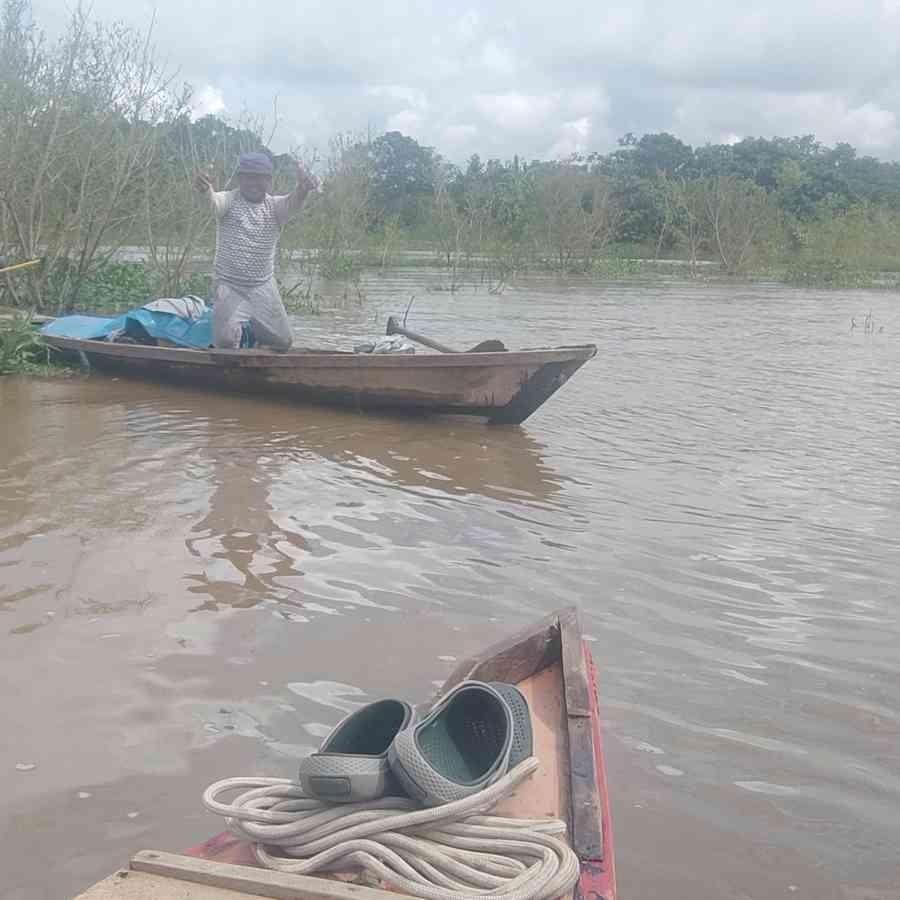
I entered the bay of the Itaya River, where the port of Iquitos is. The water is crystal clear – black, as they say here. Everything would be great, but there are still three kilometres to row to the port –against the current. The wind is blowing sideways. Heh, what is the finish line supposed to be like? I did not think I would be greeted with ribbons, did I?
I have been paddling for two hours along the bank. Occasionally I meet people who cheer me up, but I am running out of energy. If I had a simple canoe with no stability logs on the sides, it would be easier, but the price of stability on the waves is speed.
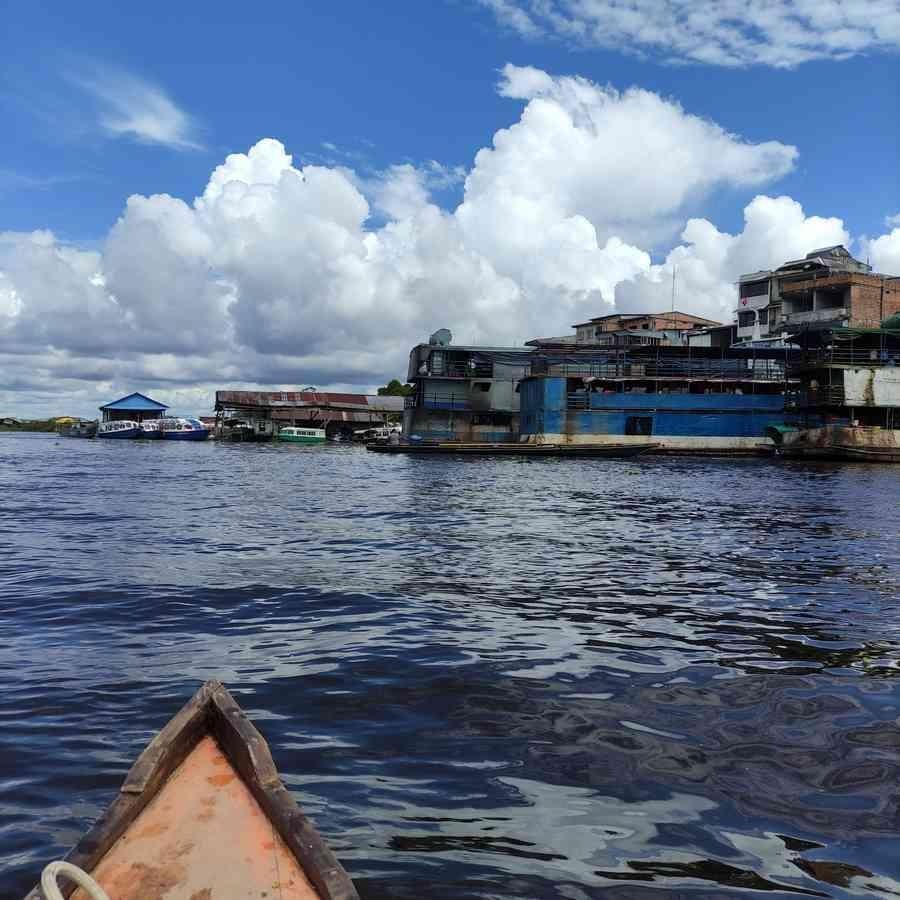
My hands are already blistered, and the bay stretches endlessly. On my right side, there are huge ships at the dock – tourist lanchas with 3 or 4 decks, tractors, and barges. I still have at least a kilometre to go. I cannot pause or the current will carry me back.
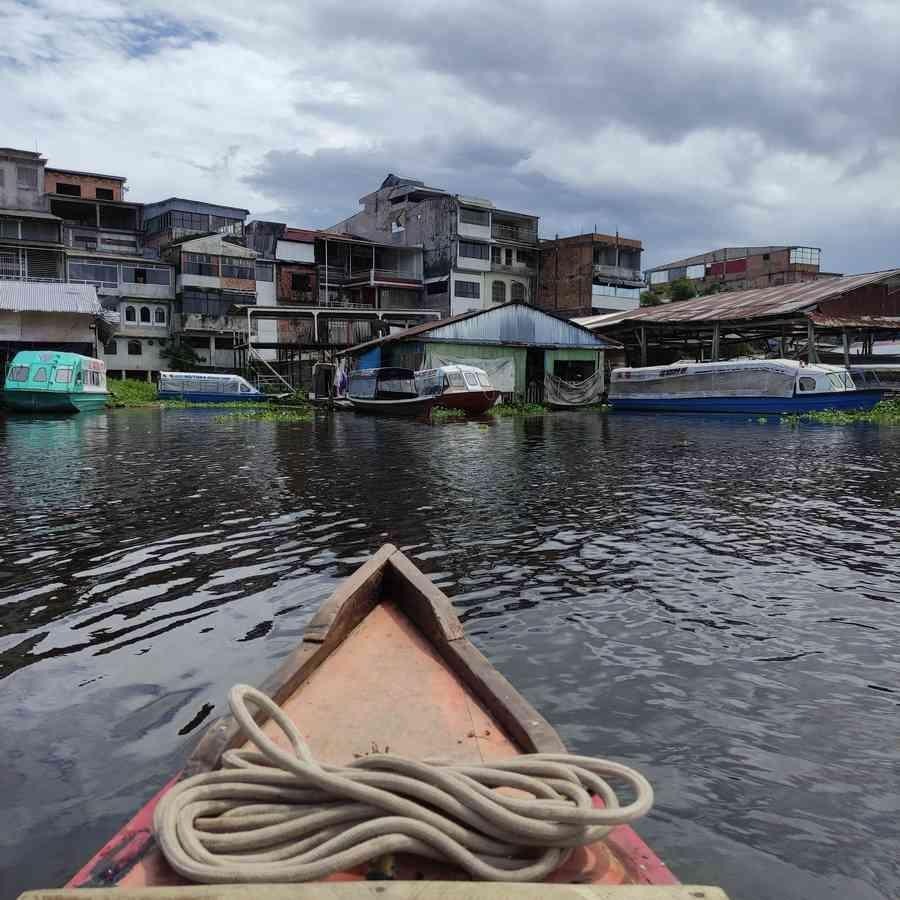
I have made it. Finally! I spent 27 days on the river. Now I am in Iquitos, the capital of the Peruvian Amazon. You might think my hardships are over, but they are not. I am back to civilisation, with all that entails. The city is home to several hundred thousand people. Finding a safe place for the night is my priority. I do not know anyone here.
I have been circling around one of the smaller harbours with houses on the water, hoping to find a place to dock. I have done that before. I just have to wait and look around. I drop in one place, say hello to people, talk a little bit. Then I try another place. No, that is where taxi drivers dock. Then a local bloke spoke to me and said that just round the corner there was a woman’s shop where I could dock. He said it was quiet and safe. I will try it.
He was right. As I rounded the corner, I found a small house with a fenced-in guest area. The whole thing rested on huge stilts made of metre-wide tree trunks; the trees used to be decades old. I timidly approached the entrance in my canoe and said hello. I was greeted by a smiling woman in her forties. Her name was Yoli. I asked what I could buy from her. We talked.
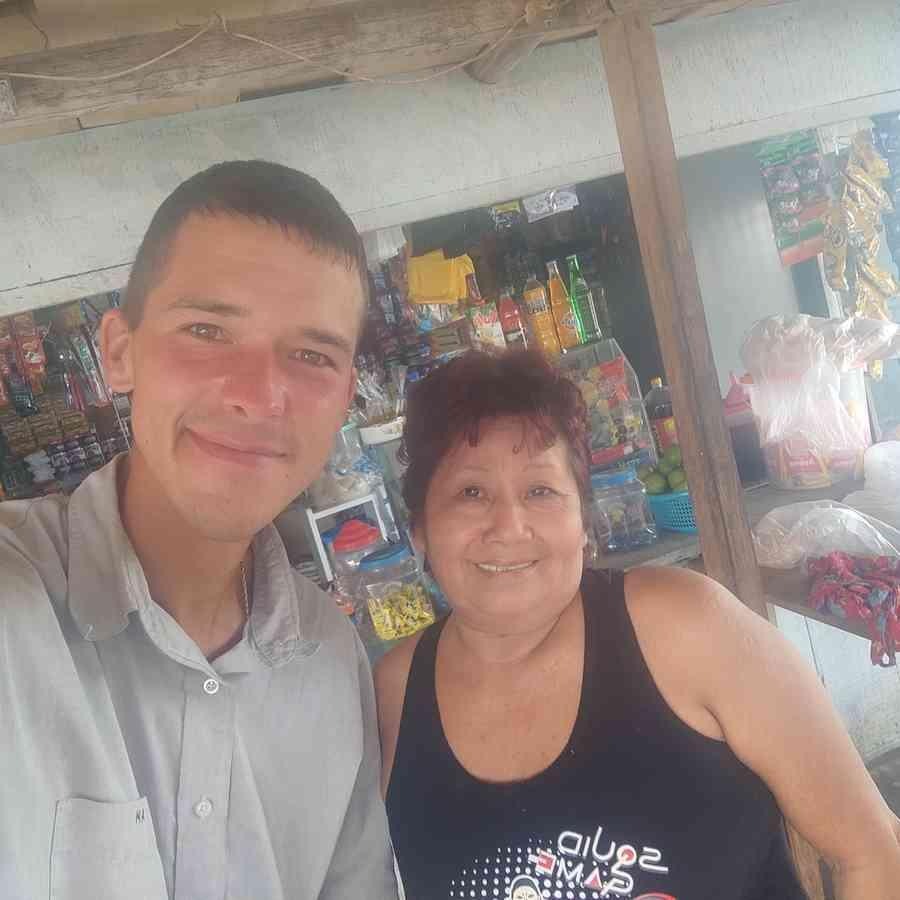
Yoli did not seem to be a particularly sociable person, but as she understood my predicament – I am a stranger with a boat in the big city, she suggested that I could tie up the boat at her house on the water. She said it was no big deal, the place is quiet and peaceful, and she can keep an eye on it whenever I leave. It turned out that she hardly ever leaves her small shop, spending days and weeks here alone.
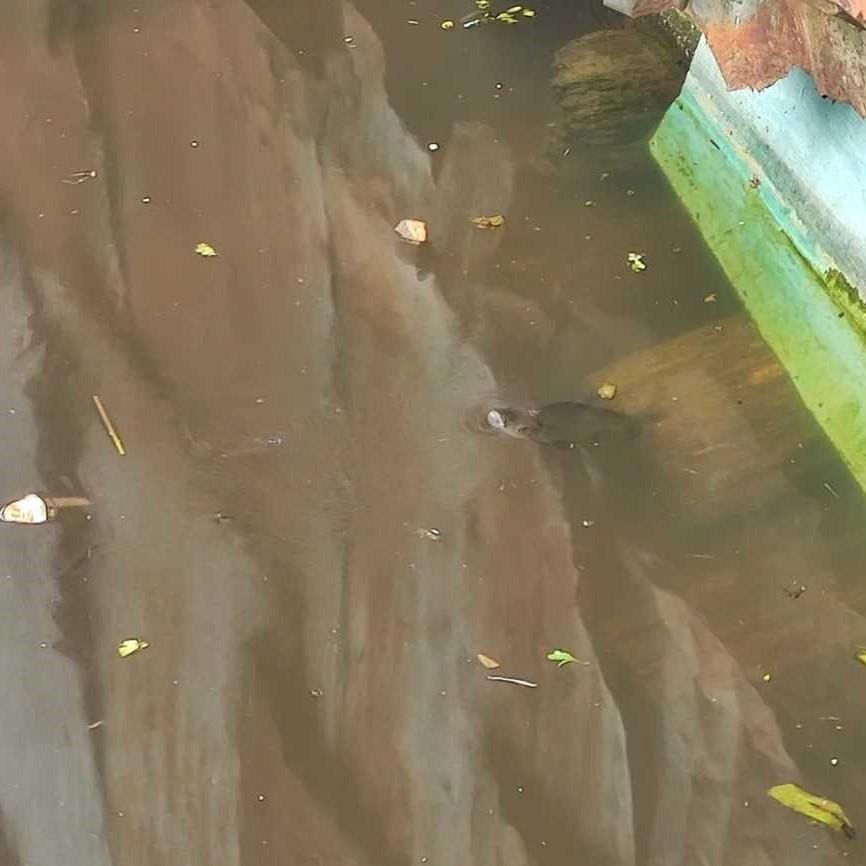
Now that my belongings were safe, I left the canoe in the harbour and went into town. Walking here is quite an undertaking. The houses on the water form a network of passages. I follow the planks that make up whole streets on the water. There is a lot of rubbish everywhere. Seeing it gives me an almost physical pain. In between the rubbish, there are huge fish, any one of which I would have loved to see on my plate. The fish would smell like petrol, though.
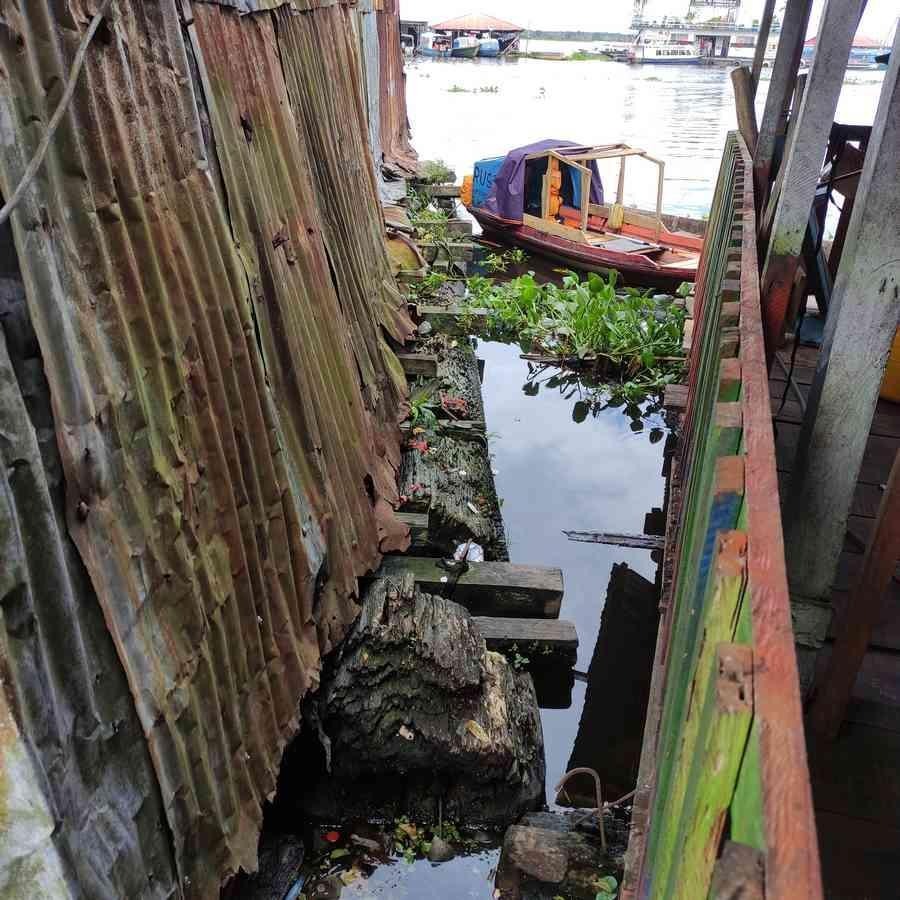
The staircase that leads into the city is a 20-metre climb, a narrow long tunnel upwards. The thing is that the water level in the river is constantly changing, and the floating houses just go up and down like buoys. I was told that right now they are about 23 metres above the ground, and when the peak of the dry season comes, the houses will stand on the ground again. I had imagined that the water level changes by 5-7 metres, but not that much. It is truly amazing.
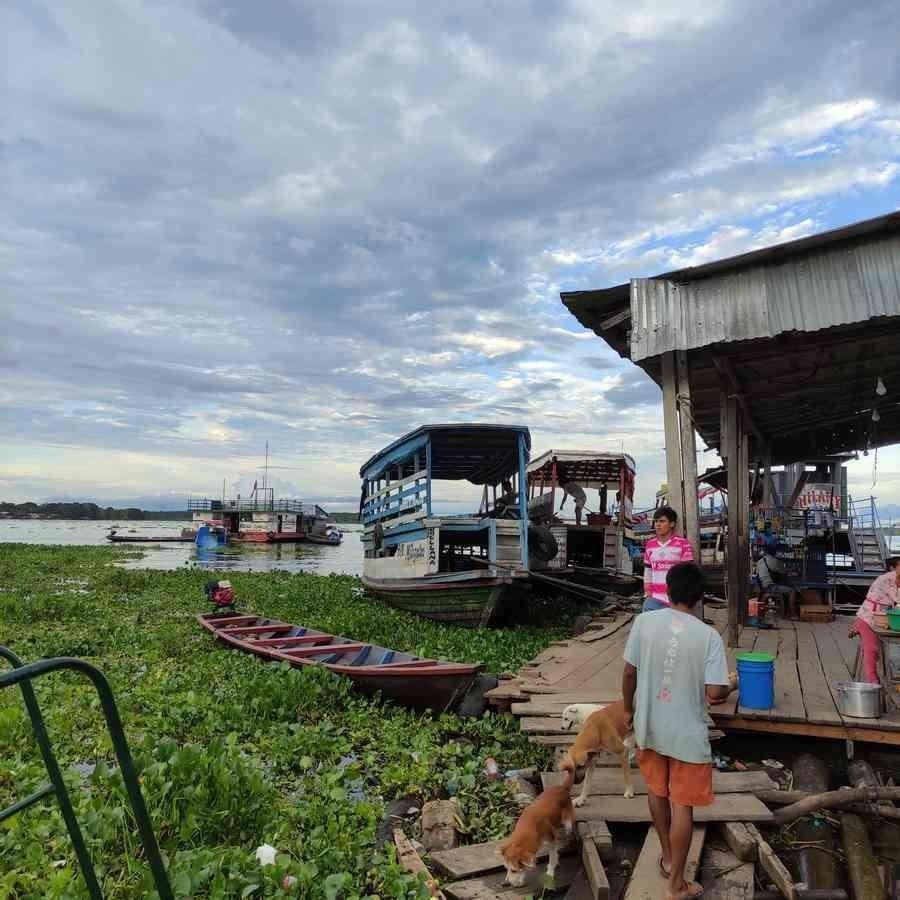
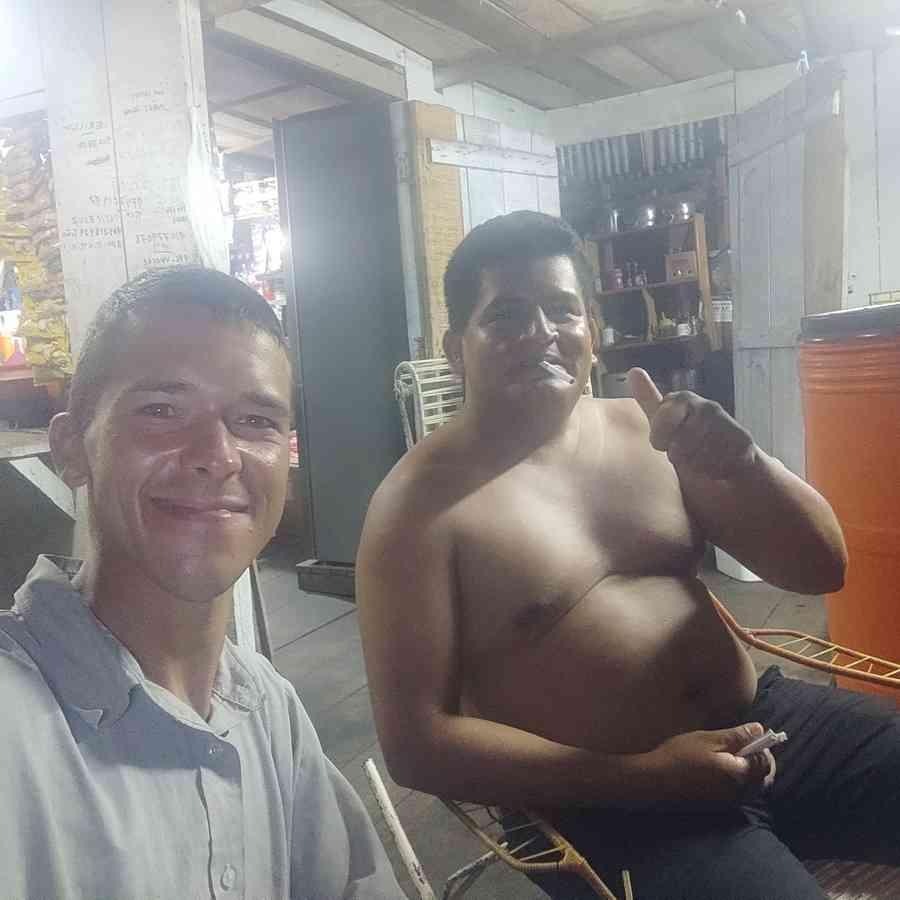
Once up in the main streets, I realised quickly that I had not missed the rumble of three-wheeled motorbikes which are the main land transport in the Amazon. I wandered around the neighbourhood for a bit and returned to Yoli’s place, where I met one of her friends, Julio. He and his daughter sometimes come down to the harbour to visit her, to fish and to chat. We talked about fishing for a few hours.
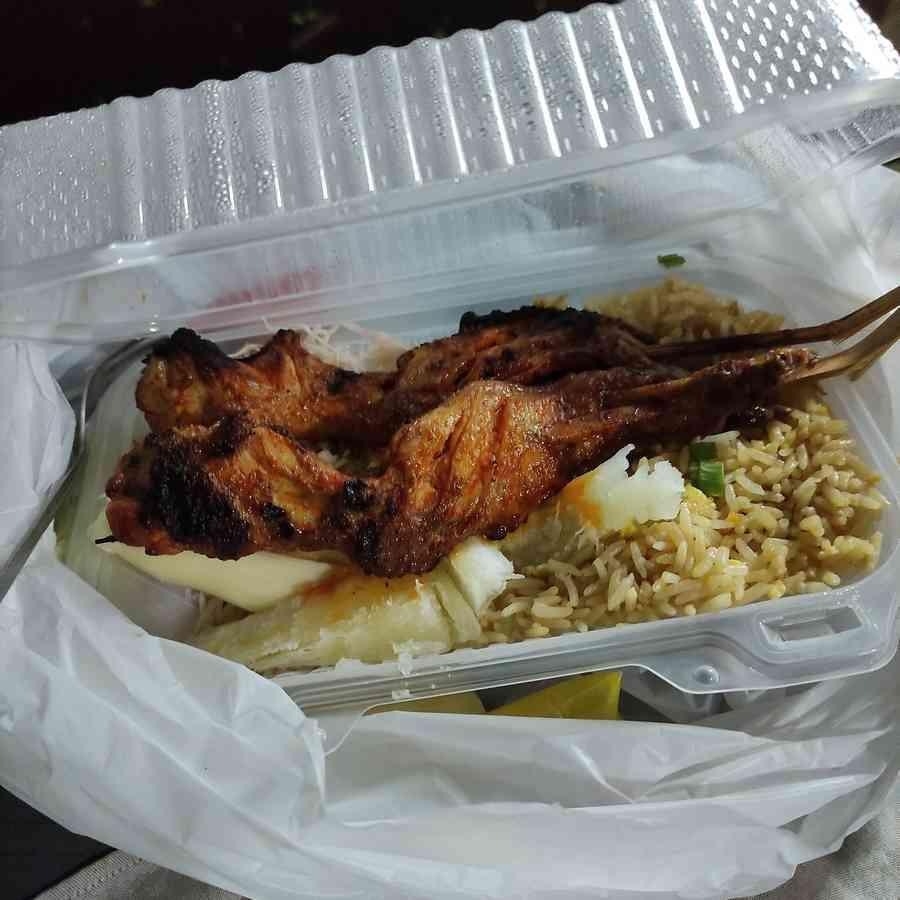
Before I knew it, it had grown dark. Yoli had brought me a lovely dinner – a container with rice, yuca and chicken. I did not expect it at all. I keep saying that the world is better than they say. Every such case is a gold argument in my collection, as is the fact that I am still alive after travelling this far. It is just everyday magic.
Yoli offered to let me use one of the hammocks under her roof to sleep in, but I decided not to leave my canoe unattended. I trust her, but there are other people in the harbour. Unfortunately, as is usually the case, there are too many drunks, vagrants of all sorts, and bandits. A guy in a white shirt and a hat always attracts too much unwanted attention, even though a closer look reveals that I am already quite shabby.
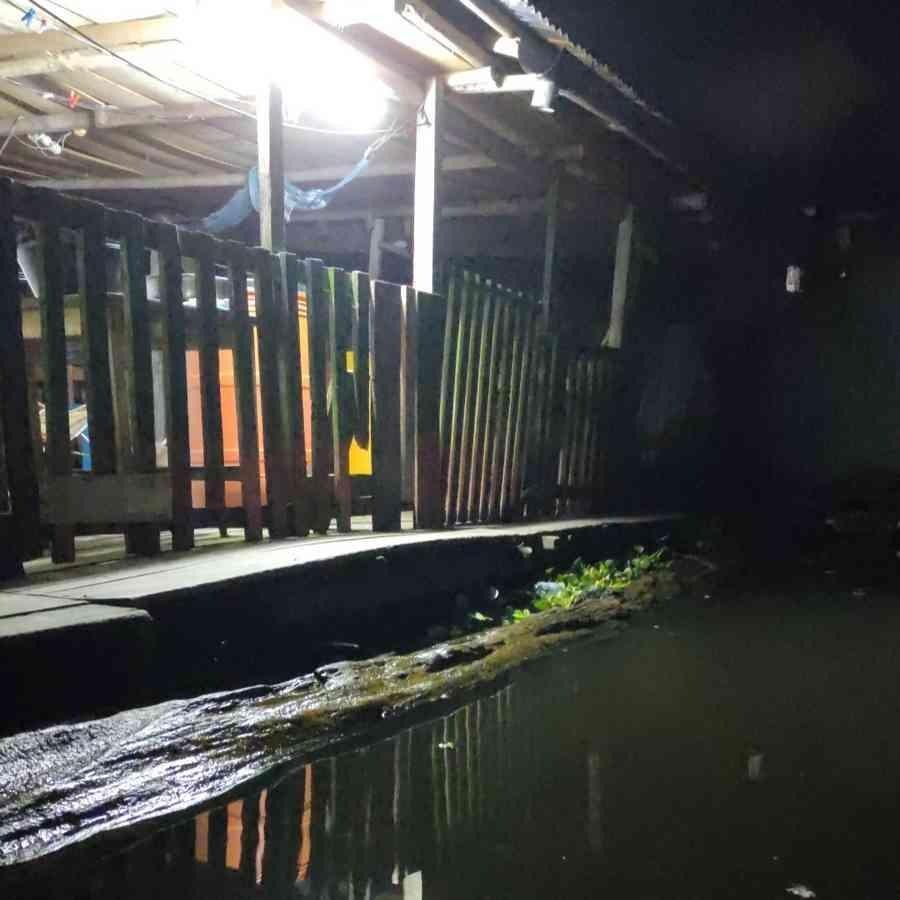
I am falling asleep in the canoe, which is tied securely to the house. Sometimes speedboats pass by and cause waves, but my ‘Libertad’ holds on. We have seen worse waves! Good night.
11 May, ~32 (1084) km covered.


