Contact
Write to me
If you have a question, an idea, an invitation to speak, or just a few words after reading.
The world is better than they say. I’ll show you.
The world is better than they say. I’ll show you.
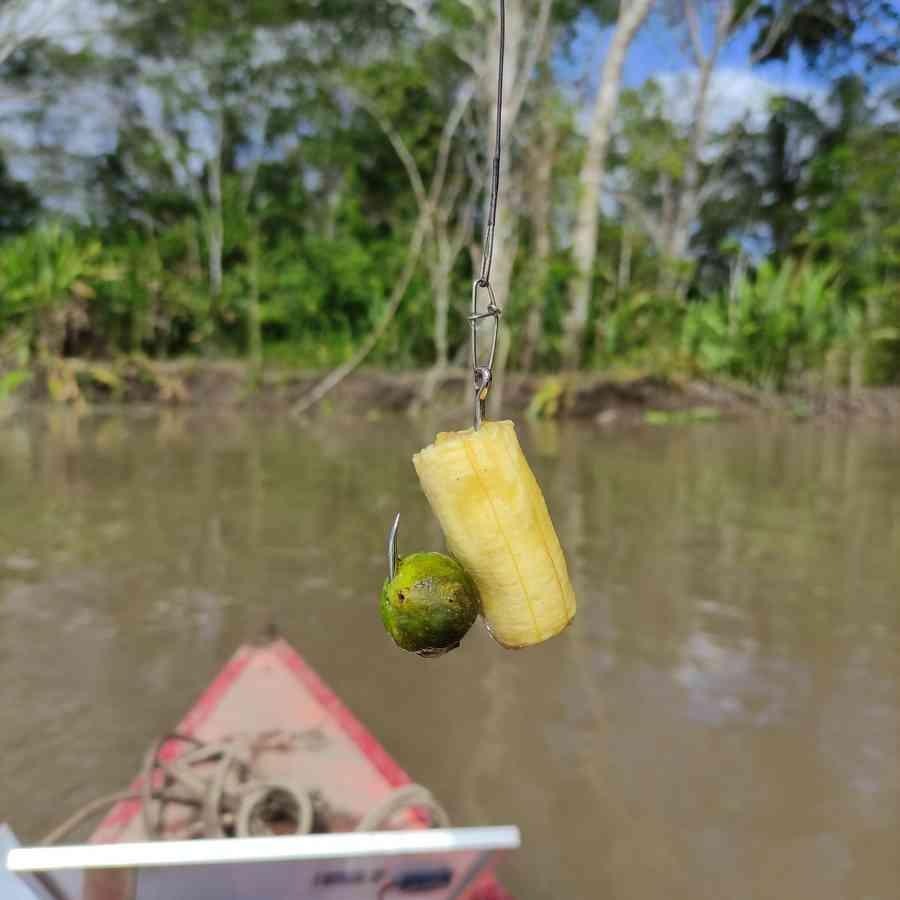
This night sleeping in the hammock was much more comfortable. In the morning, I decided to try my luck at fishing again, set up the bottom tackle and went to pack my things. When I returned, a large area of the bank where I had walked not so long ago was completely gone. It had been swallowed up by the river. It collapsed when another ship passed by, and a large wave hit it. Sure, there is danger at every turn. Nevertheless, my fishing equipment stayed untouched! The Amazon failed to get it this time. I checked that I caught nothing and continued my journey.
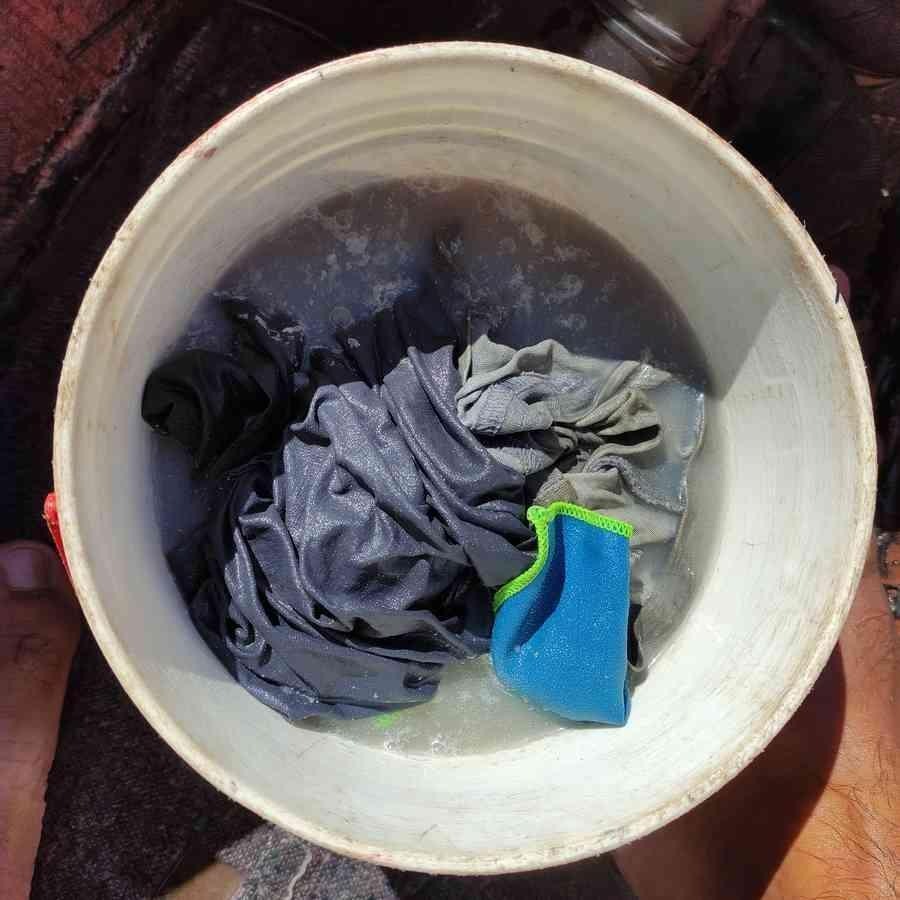
Do you know what is so special about doing laundry on this river? The colour of the water does not change in the process. That makes me a little nervous. I am still squeamish about washing my face with Amazonian water without soap (but then I rinse the lather off with this same murky water anyway). It is not an empty precaution. I have read that now and then in the river there are pools where schistosoma dwells in the thickets. It is a dangerous parasite carried by snails. But what can I do about my laundry? I can only move further away from the bank and imagine that this is not muddy water, but something else, like cocoa. My imagination has worked its magic in more situations than this, but it is powerless now. Will this trick work in a couple of weeks?
Ants have become my frequent guests on board, but the bullet ants are particularly notable. I had read about them many times while searching for tips what I might encounter on the Amazon. This is one of the largest species of ants (over 2 cm long), and it has a particularly painful sting, hence the name. On board, they behave like civilized creatures – they do not attack me, although once I sat on one of them carelessly. It hurts, but not so much that you would scream uncontrollably. It is comparable to a hornet sting. However, I do not recommend trying it.
Life is slowly improving. I made a bed: I stretched a lifejacket on a soft cushion from a packraft. It turned out to be a good chair. The sun burns more and more every day. I am thinking about building a tent. I could use my raincoat and stretch it on a frame, with its reflective side upwards. Some protection from the sun would make my life a lot easier.
All sorts of insects come to the boat. Some follow me out of the jungle to drink my blood – there are mosquitoes of various kinds and black gadflies that bite quite painfully. Others are completely harmless – butterflies, mayflies and other species unknown to me. Sometimes I regret that I have a degree in IT and Economics, and not in Biology. With that kind of background, it would be more interesting for me to be here, but I doubt I would have been able to find the time for such a long adventure then.
This night was easier. A lot of things depend on how well you sleep, but a good night’s sleep does not guarantee an easy day. The sun is scorching hot right now, and I almost ran out of water. I will look for villages on the way to replenish my supply, and if I cannot find any, I can try filtering river water, I have packed a filter with me. The problem is that, at this level of contamination, the filter will quickly clog, and it will be of little use after that.
The river is constantly changing – in every sense of the word. Sometimes I go down the quiet, calm water, and suddenly it rages and froths. The current picks me up and sends me straight into a whirlpool, and I hardly have the time to carefully cover my precious farinha flour from the splashes of water. The river twists and turns the boat in all directions. Apparently, this happens because of the difference in depth at the bottom and underwater currents, as the river is very deep. Sometimes even 50 metres of braided fishing line are not enough to reach the bottom.
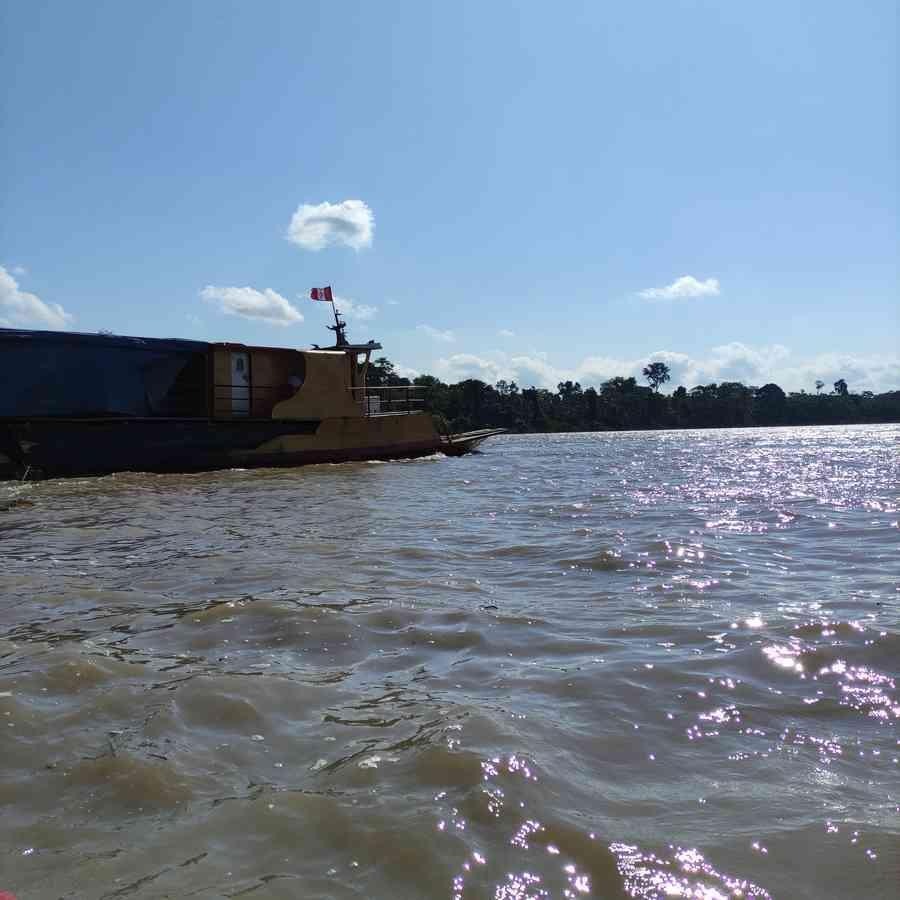
For the umpteenth time I come across a huge tree on the water; it is at least 15 metres long. Should I hook on to it? It seems to be travelling through the water at a much faster speed than I do. Perhaps it is carried faster because it has larger contact area with the current. If it hits the bank, I will let it go. It will not be dangerous, will it?
I decided to throw a noose on one of the branches of this log. I calculated that without it, paddling only, I can develop speed up to 12 km/hour. That is not bad, considering the two logs on the sides, but I will not last paddling for a long time. I need a lot more energy and food, and I am still having a hard time fishing. With the log on the tether, I can go at the consistent speed of 7 km/hour, and without it, relying on the current, I can make about 5 km/hour. I think the choice is obvious.
I put a loop on the branch with a lot of precautions, so that in case the trunk turns over, the loop would come off on its own. It is a risky venture, and you have to be really careful playing games like this. Now that I am carried down the river at a good speed without my active effort, I will be able to construct a tent. I need some materials, though.
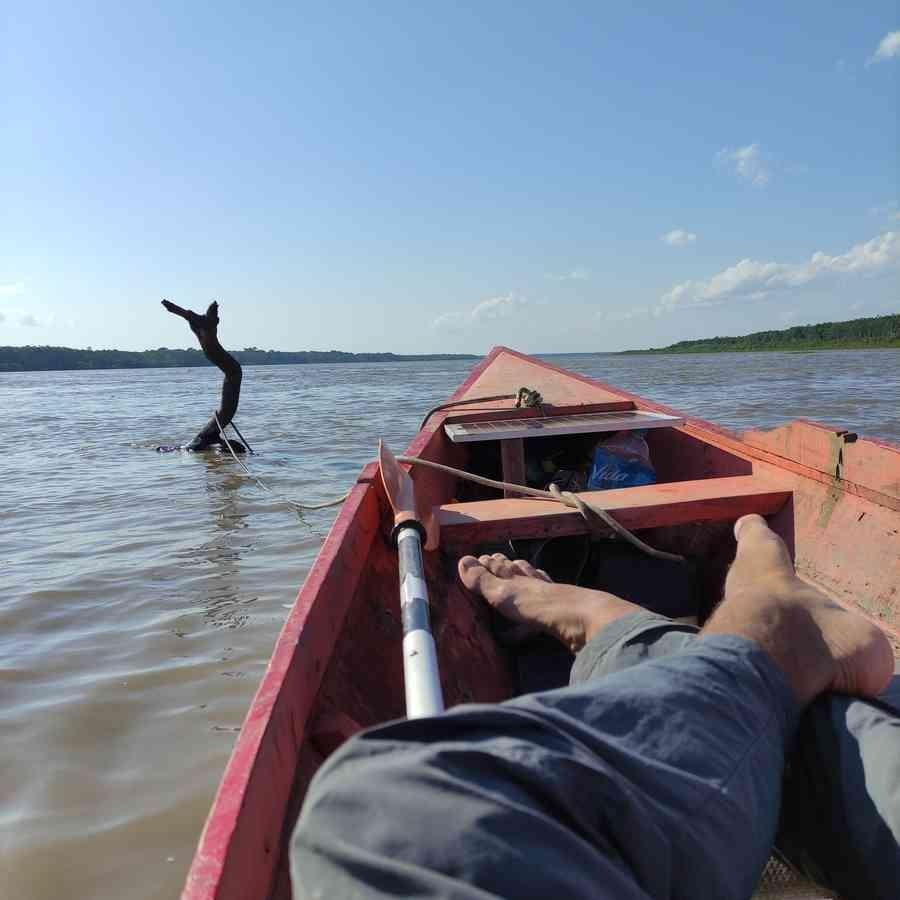
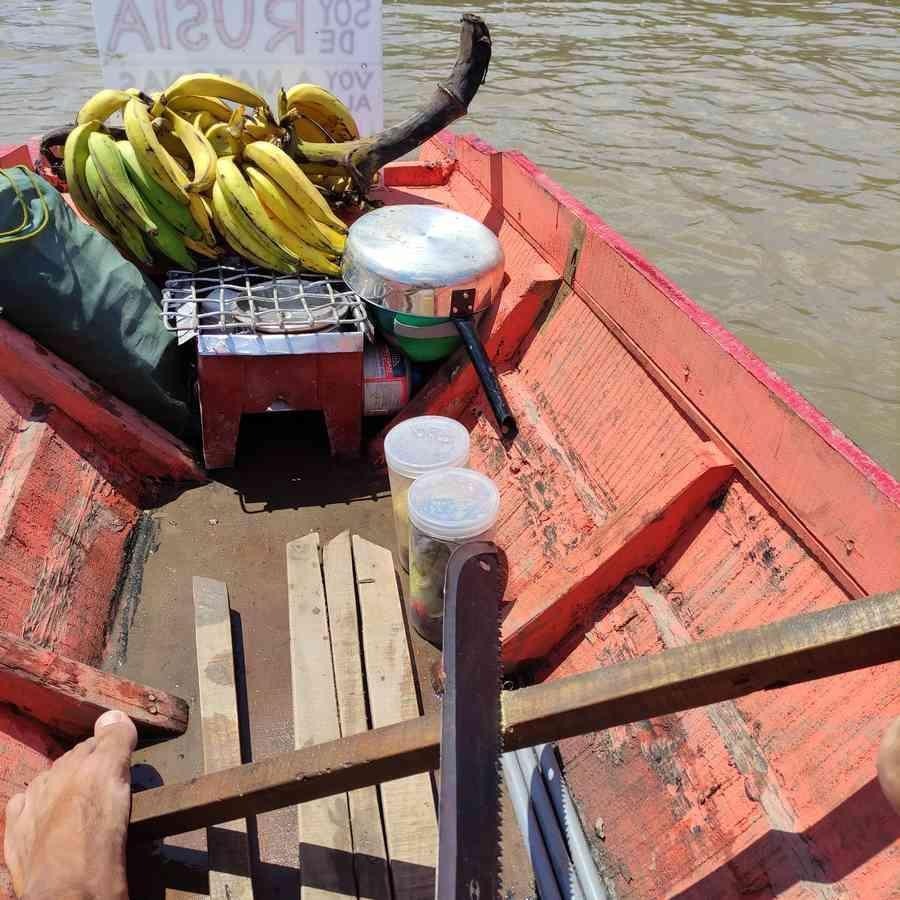
I have a free rider on the boat! A huge tropical cockroach was secretly devouring my supply of bananas. It is a very big bunch, about 10 kilos, and some of them are already ripe. You should have seen me chasing the cockroach with a mug, trying to kick it out of the boat. What a comical situation. I cannot say that I was afraid of it, but I was rather squeamish. Who knows whether he is poisonous? It is a disaster best prevented than tested. Our unequal struggle ended with the cockroach falling overboard and probably hiding more securely, as I never saw it again that day. It is quite a clever chap.
I have got my boat in order now. I built two shelves, and all the six cans for food and supplies fit underneath. I am going to cover them with my raincoat to shelter them from the sun. My life on the boat is getting more and more comfortable, except for one little ‘but’: the boat is leaking. True: the water in the boat is clean, transparent, one could even say filtered – so the leak must be small, but it does not make me feel much better. It is not easy to sleep quietly in a leaking boat.
The day is coming to an end, but for me that means that the adventure is just beginning! Now evenings and nights are the hardest part of the day for me, as I need to find and set up a place for sleep as well as escape all the mosquitoes. I paddled along the bank for almost an hour, looking for a good spot. In the end I stopped in the least unpleasant place.
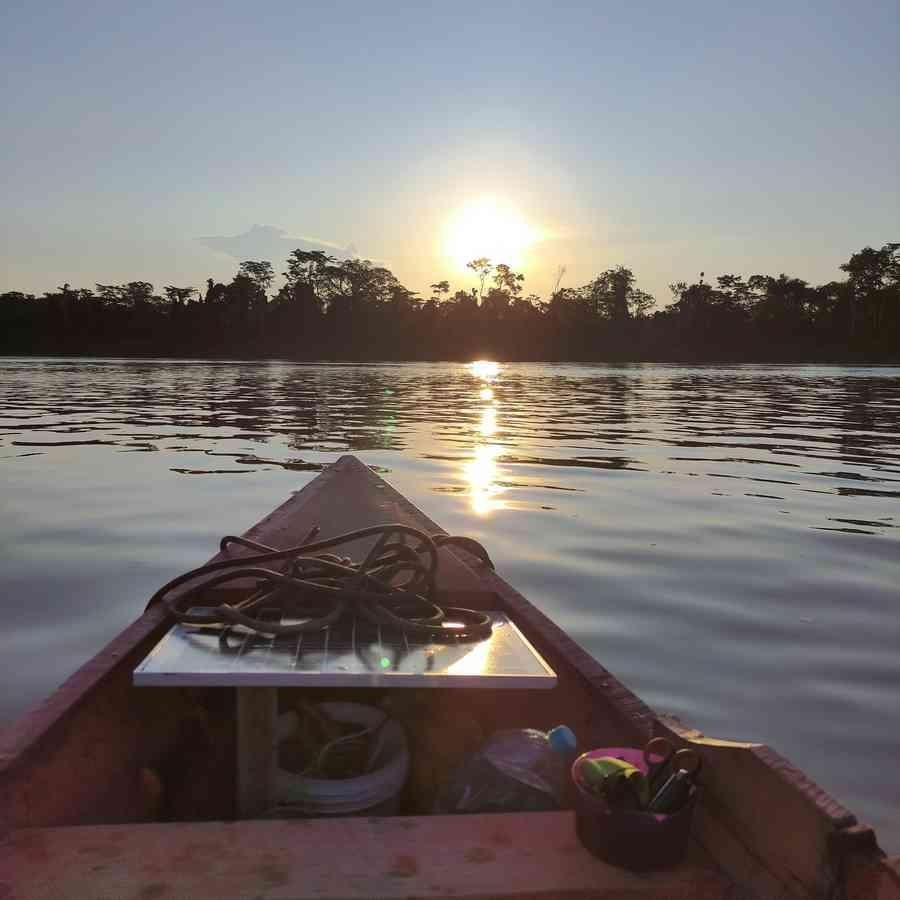
The sun had set, and a buzz rose over the jungle from swarms of mosquitoes flying out in search of prey. This accelerated the process of me cutting down the reeds to set up the hammock quite significantly. It took at least 10 metres of distance for me to cut through to the trees. Exuding sweat, I dragged my things from the boat. I stretched out the hammock and hid inside. That’s when an unknown guest came to me….
I heard my pot clank and turn over. I jumped to my feet and directed my torch at the noise, but only managed to catch a glimpse of a huge tail, whose owner rushed into the bushes. I guess it was embarrassed. One good thing is that I managed to lower the number of mosquitoes in the hammock! That is good news.
I am falling asleep to the polyphony of the jungle. As the sun goes down, it literally comes to life. You cannot imagine a better lullaby. Yes, there’s some big animal scurrying around, but it does not bother me. There is only one animal I would rather not face at night, and it walks on two legs. It is a human.
18 April, ~43 (127) km covered.


