Contact
Write to me
If you have a question, an idea, an invitation to speak, or just a few words after reading.
The world is better than they say. I’ll show you.
The world is better than they say. I’ll show you.
The first thing that catches your eye in Tabatinga is the abundance of cars and motorbikes. There are no rickshaws at all – these motorbikes converted into small cars could be seen everywhere in the Peruvian part of the river basin. The difference in the standard of living is immediately visible. Prices here are also on average 1.5-2 times higher, so it was not cheap for me to do my grocery shopping. It is great that I bought the tarafa net in Iquitos, as here it costs 400 instead of 170 Peruvian soles! Just feel the difference, as they say.
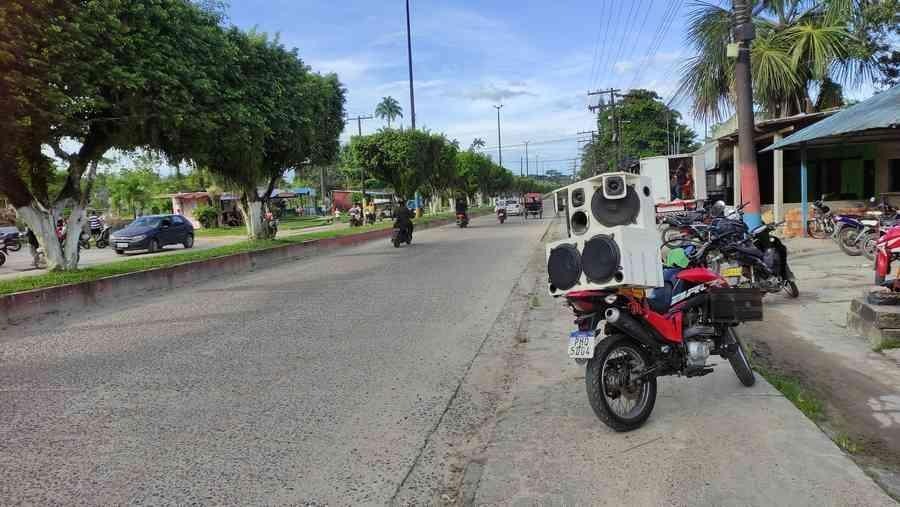
A whole crowd gathered outside my boat again while I was doing minor repairs, wielding a hammer and waiting for the doors of the migration office to open. There is nothing new about it. As soon as someone found out that I was planning to cross the Brazilian part of the river in this little canoe, they immediately shook their heads and said that I was crazy. I had already got used to it.
I bought two bags of bread, a portion of juane (rice pilaf in a leaf), and a bunch of bananas – that is one thing that can be eaten with farinha without bothering to cook. I found a nice notebook as well. Even though spending a day in a bag of dry rice has helped my phone recover a bit and it even started to take photos again, the battery is still barely working. So, I save all my notes to a file on the SD card, and I will also be writing notes in a paper notebook. If I am robbed, I will hand over the phone and beg them to let me keep the SD card. That should work. Unless I am killed, of course.
I saw a crocodile’s leg sold at the market! I must be very close to my goal – I want to see a crocodile in its natural element, outside of sanctuaries and zoos. They say there are some big ones out here.
It is a beautiful day. There is bright sunshine, and a refreshing breeze is blowing. It took me about an hour to leave the harbour as my boat was blocked by boats of other visitors.
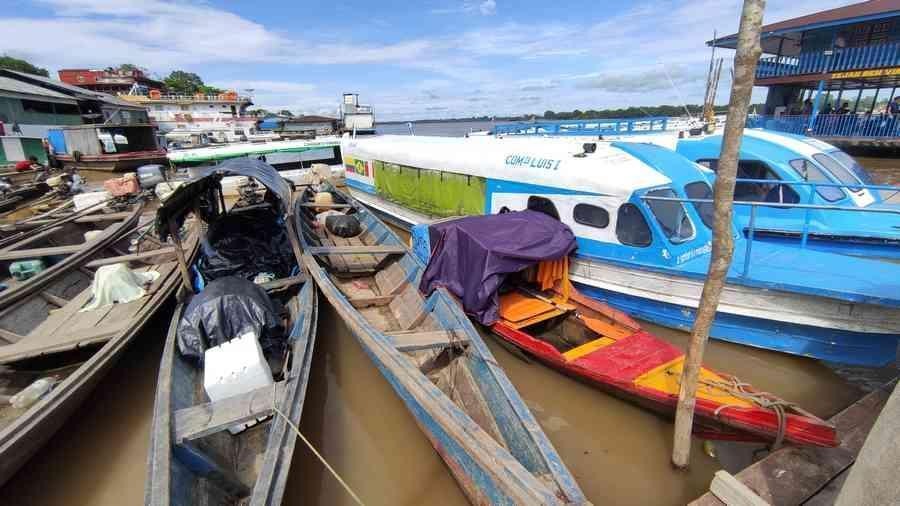
I am back to Brazil where I had started, and back on the river as well. In these parts the great river is called the Solimões River, which is quite interesting. Brazilians suppose that the Amazon itself begins only in Manaus, where the Rio Negro and the Solimões River merge. To me and the world, however, the Ucayali and the Solimões River are all one river – the Amazon.
From the first minutes, I feel the difference. I am greeted by people from almost all boats, they are not afraid of me like Bolivians or Peruvians were sometimes. No wonder, those people live in one of the most dangerous countries in the world where everyone has been either a victim or witness to a robbery (if not a willing participant). I guess they are just used to danger, and enjoy their life despite it. I came to a similar conclusion when I hitchhiked from Rio de Janeiro to Iguazu. People are reluctant to stop, but once they stopped, they are very easygoing.
The river here is huge. It is already at least two kilometres wide, and it is increasingly difficult to paddle out into the fairway, as well as to escape the strong waves. The stakes are rising, so to speak. The speed of the current is about 8 kilometres per hour, which is encouraging.
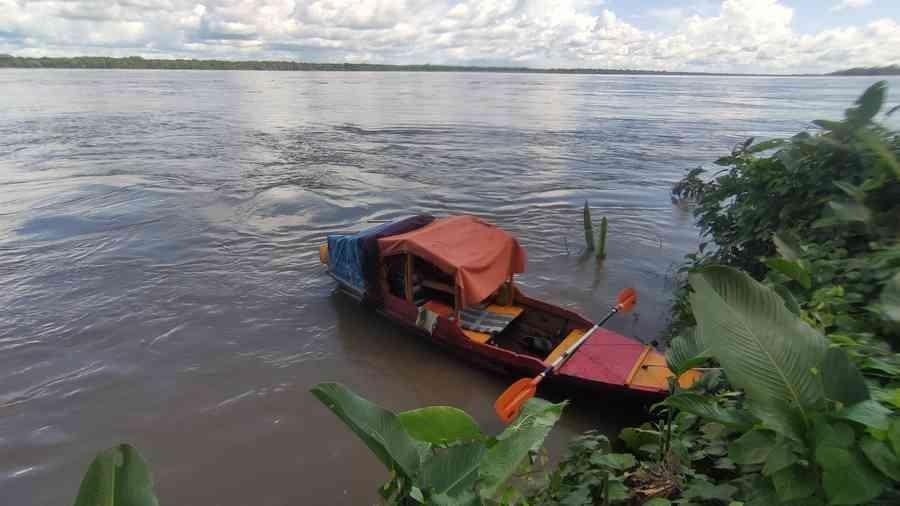
When I was planning this journey, I divided it, as you probably remember, into three parts, which would proceed as long as it was possible and, above all, as long as my health allowed. And now half of the journey is behind me, and only the final stretch of 1550 kilometres to Manaus is left. That is an intriguing thought. I am still not sure what I will do afterwards, but I want to share this story with others, so I will probably slow down, take a break and write a book based on this diary, cutting some parts short and adding necessary details in some places. Maybe. I have already thought of a good title, too: ‘Tete-a-tete with the Amazon.’ People always ask me with surprise: ‘Are you going to be alone? On the Amazon?’ I am not alone – my ‘Freedom’ is with me.
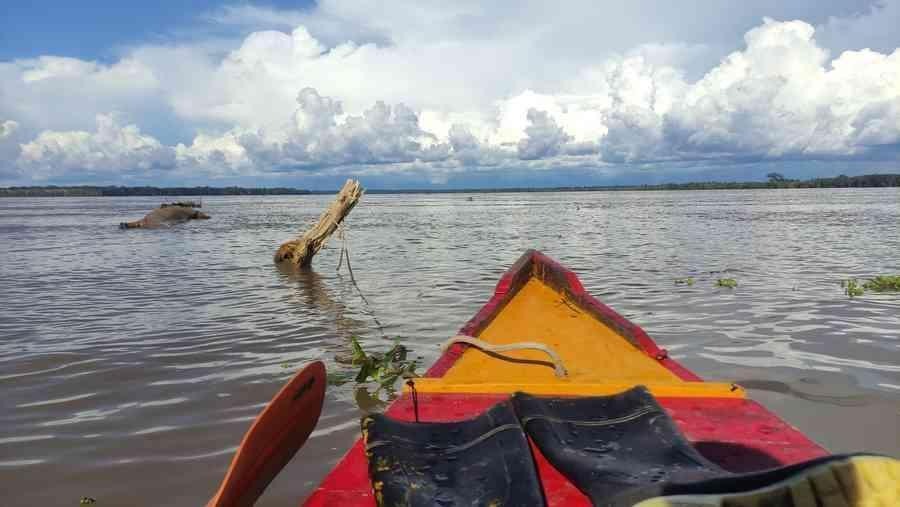
The day is drawing to its end. I am happy to note that for the first time in a whole week I will sleep completely dry – there was no harsh rain, no hellish paddling and sweat. I am looking for a place to camp. I am aiming for the huge shoal with well-settled logs ahead – this would be the second-best option after a quiet tributary, as the waves cannot gain strength in such places. I start paddling across the current. There are only 300-400 metres left, and suddenly the headwind rises sharply. There is a flash of lightning. There is thunder. The rain changed direction abruptly, along with the wind. Now I have no chance to reach the place I set my eye on.
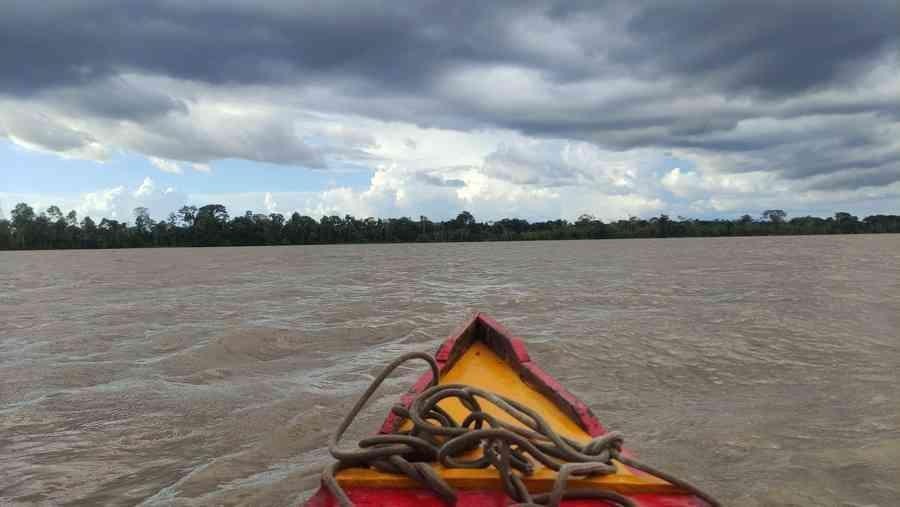
I turn round and try to paddle back to the middle of the river, but all my effort is no good. The boat turns sideways, the wind hits its tent as if it is a sail. The waves are mimicking the wind’s play. I try to turn my back to the waves and paddle backwards. It does not work; my boat faces the wind like a badly directed sail again. The waves are getting so strong that I sit deeper in the hull and hide all my stuff in the back of the boat. The rain gets closer and closer, I spot a rainbow – yes, there is still a warm sun on the other side of the river, this is the reason I have let my guard down. Time is running out.
The wind rips the tent off one of the nails that hold it. I decide to finish the wind’s work, so I take the tent extension off the hinges altogether and put everything in the low tented back part of the boat. I push at the oar with all my strength. Every time the wind or the waves try to turn my boat sideways, I respond with applying extra force. The little finger and ring finger of my left hand hurt from this kind of maneuvering, sometimes it hurts so much that I must let the two fingers rest and keep only three other fingers on the oar. I am more and more exhausted, while the rainclouds are getting closer and closer.
Suddenly I am swept up by the waves, as if my boat catches their beat. I start paddling on each rising wave, making a dash to the bank with my last strength. There is a creek! It is flowing out of the river, blocked by greenery, which is a very strange direction. Drawing strength from the very bottom of my depleted well, I break through to it and slip out of the embrace of the raging river behind me.
The atmosphere changes dramatically. I am in a quiet channel four or five metres wide. There are no waves and no resistance. Silence envelops me. Only a few birds are singing their songs. These are the kind of quiet places that both Peruvians and Brazilians have asked me to avoid at all costs along the way. I think that if there are pirates on this small river, they must live somewhere further downstream. I decide not to go too deep into the channel, lest I become an unwelcome guest.
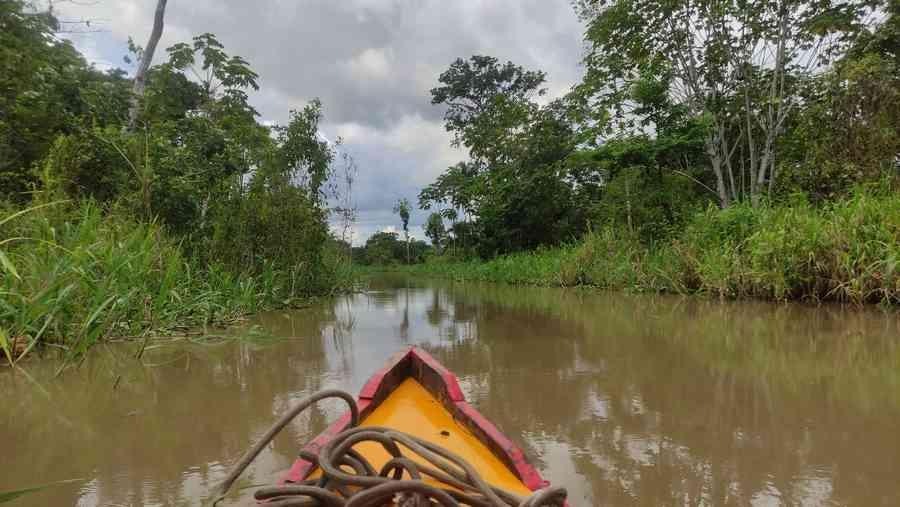
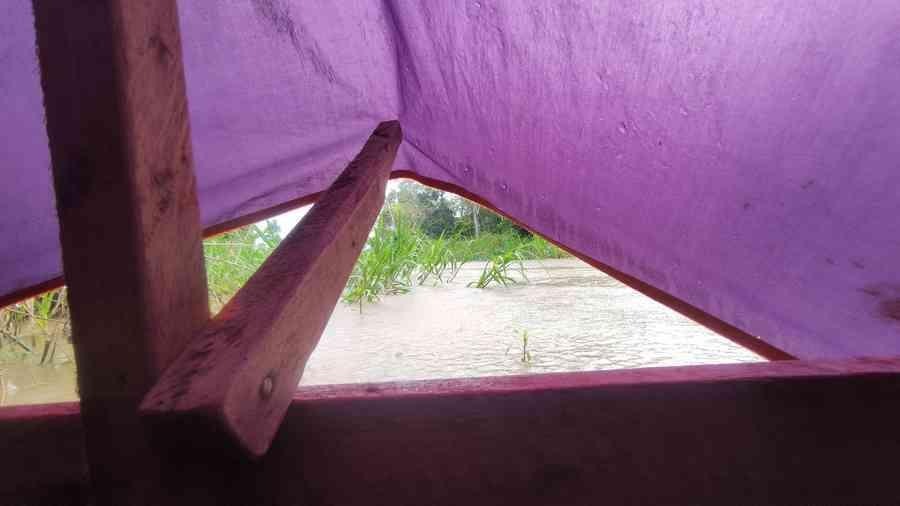
I hide the boat in the bushes, tie it to a tree and hear a chainsaw at work in the distance – it must be 3-5 kilometres downstream. Well, such a convenient channel cannot be uninhabited, it is too good for navigation. But the sun is about to set, and I cannot go back to the Amazon, it is more dangerous there. I can only prepare myself for a possible conversation. I cover my boat with the full tent and take off my soaked clothes. It is starting to rain. Just in time.
Before I went to bed, I did some fishing. I caught four catfish, but only one of them was bigger than the palm of my hand. I salted that one, chose another small one as bait and let the others go. Interestingly, they were all the same species, the name of which is unknown to me. The biggest one had a poisonous spike on its back that is 5-7 centimetres long.
Indeed, there are people further down the creek, although there are no settlements on the map. Three boats have passed me in the last hour. All the people were very surprised to see me. I hope they will not surprise me back at night.
***
As it got dark, I heard my catfish on the hook being eaten. The sound jerked me from my sleep. I jumped up, shined my torch in that direction, and saw four worm-like catfish tearing piece after piece off it – like piranhas. Then a bigger one came, and one more followed. I remember catching one of these fish once when I lived with fishermen in Peru. Jonas told me that these catfish are poisonous, people do not eat them, and they only eat dead things.
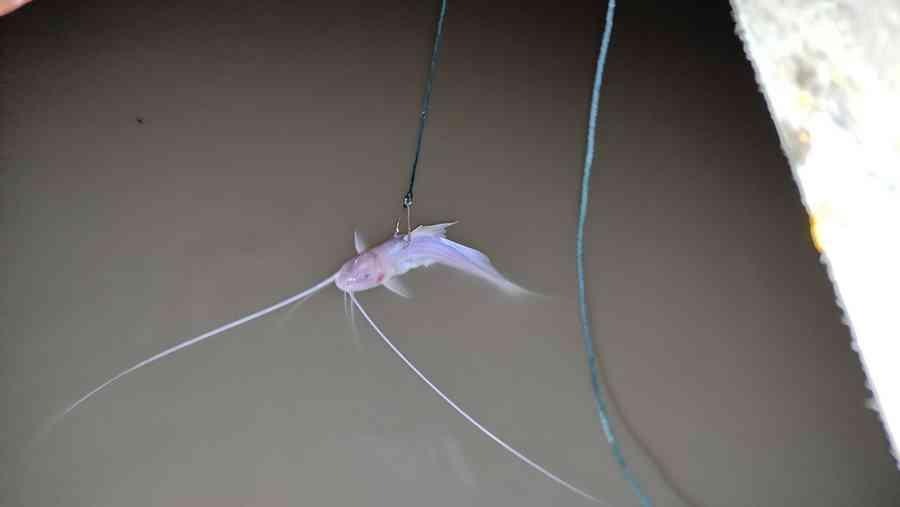
As a result, only a bare skeleton and a head were left of my bait, and I had no chance at catching any fish tonight.
26 May, ~47 (1629) km covered.


